Blog

  • The Okta Ransomware Attack: Breaches and Repercussions

    The Okta Ransomware Attack: Breaches and Repercussions

    On October 20, 2023, Okta, a leading identity and access management provider, disclosed a major security breach. A stolen credential allowed unauthorized access to their support case management system, exposing sensitive data belonging to numerous customers. This incident, now dubbed the “Okta ransomware attack,” sent shockwaves through the tech industry, raising concerns about the vulnerability of even the most secure systems.

    The attacker, using valid session tokens extracted from uploaded files, gained extensive access to customer environments. This potentially compromised critical data like usernames, passwords, and internal network configurations. While the full extent of the damage remains unclear, several high-profile companies, including Twilio, Sitecore, and Cloudflare, confirmed being impacted.

    The Okta attack highlights the evolving nature of cyber threats. Hackers are increasingly targeting trusted third-party vendors like Okta to gain access to a wider range of organizations. This “island hopping” approach underscores the interconnectedness of our digital ecosystem and the ripple effects of even seemingly isolated breaches.

    The immediate aftermath of the attack saw Okta scrambling to contain the damage and reassure customers. They revoked compromised tokens, reset passwords, and implemented additional security measures. However, the long-term repercussions are still unfolding. Affected companies are now grappling with potential data breaches, reputational damage, and the costs of incident response and remediation.

    The Okta attack serves as a stark reminder of the importance of cybersecurity vigilance. Organizations must prioritize robust security protocols, including multi-factor authentication, regular security audits, and employee cybersecurity awareness training. Additionally, diversifying vendor reliance and minimizing reliance on single points of failure can help mitigate the impact of future attacks.

    In conclusion, the Okta ransomware attack is a wake-up call for the tech industry and beyond. It underscores the need for continuous vigilance, proactive security measures, and a collaborative approach to combating increasingly sophisticated cyber threats. Only by acknowledging the interconnectedness of our digital world and working together can we effectively protect our data and our systems from malicious actors.


    Alvaka is available 24×7 to assist you with any of your cybersecurity needs. Fill out the form on this page or call us at (949)428-5000!

  • Are You Phish Bait? Unmasking the Tactics That Target You

    Are You Phish Bait? Unmasking the Tactics That Target You

    Phishing is a common type of social engineering attack that attempts to trick people into revealing confidential information, such as passwords, credit card numbers, or Social Security numbers. Phishing emails are often disguised as legitimate communications from people you know, colleagues from work or other associations, banks, government agencies, and more. Many phishing campaigns will align their messaging to current political, social and other events of upheaval, even weather stories and other disasters are used to get the attention and increase curiosity of users. Today’s phishing attacks are often very sophisticated, targeted and may even use machine learning and AI technologies to make them more personal and therefore more effective. Phishing today is responsible for most successful computer intrusions. We see scores of attacks that could be linked to successful social engineering activity.

    The downloadable CISA Phishing Prevention Guide is a valuable resource for individuals and organizations of all sizes to learn about and defend against phishing attacks. The guide provides comprehensive information on the latest phishing techniques and trends, as well as actionable advice and recommendations for mitigating phishing threats. One of the most important things that individuals and organizations can do to protect themselves from phishing attacks is to educate themselves, their employees and customers about phishing and the extreme risks associated with failure to be deeply skeptical and protect themselves.

    The CISA Phishing Prevention Guide provides a variety of resources to help organizations train their employees on phishing awareness, including:

    • What phishing is and how it works
    • Common phishing techniques
    • How to identify and report phishing emails
    • How to train employees to be more aware of phishing attacks
    • Technical measures organizations can implement to mitigate phishing threats

    The CISA Phishing Prevention Guide is a valuable resource for several reasons:

    • It is comprehensive and current. The guide covers the latest phishing techniques and trends and is regularly updated to reflect new information.
    • It is authoritative. The guide was developed by CISA, a trusted source of cybersecurity information and guidance for the public and private sectors.
    • It is practical. The guide provides clear and actionable advice and recommendations for individuals organizations of all sizes.

    Here are some specific examples of how the CISA Phishing Prevention Guide can help organizations:

    • Implement technical mitigation measures. The guide recommends a number of technical measures that organizations can implement to mitigate phishing threats. These measures include email filtering, multi-factor authentication, and security awareness training.
    • Improve their incident response process. The guide provides guidance on how to respond to a phishing attack if one does occur. This guidance can help organizations minimize the damage caused by a phishing attack and recover more quickly.

    The CISA Phishing Prevention Guide provides a variety of resources to help organizations train their employees on phishing awareness, including:

    • Training materials: The guide includes a variety of training materials, such as presentations, handouts, and e-learning modules. These materials can be used to teach employees about the different types of phishing attacks, how to identify phishing emails, and what to do if they receive a phishing email.
    • Simulation exercises: The guide also includes simulation exercises that organizations can use to test their employees’ phishing awareness skills. These exercises can help organizations to identify any gaps in their training and to make necessary adjustments.

    In addition to training employees, organizations can also implement a variety of technical measures to mitigate phishing threats. The CISA Phishing Prevention Guide recommends the following technical measures:

    • Email filtering: Email filtering solutions can help to block phishing emails from reaching employees’ inboxes.
    • URL reputation services.
    • Multi-factor authentication (MFA): MFA requires users to provide two or more factors of authentication to log in to their accounts. This helps to protect accounts from being compromised even if an employee’s password is stolen.
    • Reduce local rights on computers to limit the impact of attacks on a user.
    • Don’t use admin accounts to do non-admin functions.

    The CISA Phishing Prevention Guide is comprehensive, authoritative, and practical, and it can help organizations to improve their cybersecurity posture and reduce their risk of being compromised by a phishing attack. If you have further concerns, or just want to learn about how Alvaka can support your organization’s phishing prevention journey, don’t hesitate to reach out.

    Read some of our other Phishing Blogs:

    What is Phishing, aka Social Engineering, and How Do I Avoid It?

    A Scary Incident of a $21.5 Million Successful CEO Phishing Fraud


    Alvaka is available 24×7 to assist you with any of your cybersecurity needs. Fill out the form on this page or call us at (949)428-5000!

  • Why is Patch Management Critical for your Business?

    Why is Patch Management Critical for your Business?

    What is Patch Management?

    Patch management is a critical practice to ensure the security, stability, and compliance of computer systems. It involves a systematic approach to identifying, evaluating, testing, and deploying patches while minimizing disruptions to business operations. However, relying solely on patch management may not be sufficient in today’s dynamic threat landscape. To bolster defense mechanisms, organizations are increasingly adopting a proactive defense strategy. This approach emphasizes anticipating and preemptively addressing potential security threats, going beyond reactive measures. A more comprehensive approach to security that transcends simplistic criticality scoring is essential. Understanding the challenges that come with both patch management and adopting a more comprehensive security approach can collectively mitigate the risks associated with software vulnerabilities and potential security breaches.

    Overview of patch management:

    1. Patch Definition: A patch is a piece of code or software that is designed to address a specific issue in a program, operating system, or application. Patches can include security fixes, bug repairs, performance improvements, and feature enhancements.
    2. Importance of Patch Management:
      • Security: Patch management is essential for protecting systems and networks from vulnerabilities that could be exploited by malicious actors. Cybersecurity threats, such as malware and hackers, often target unpatched software.
      • Stability: Patches can also improve the stability and performance of software, preventing crashes and other issues.
      • Compliance: Many regulatory requirements and standards, such as HIPAA, PCI DSS, and GDPR, mandate that organizations keep their software up to date with security patches.
    3. Patch Management Process:
      • Identification: IT administrators or security teams identify available patches through vendors’ notifications, security advisories, or patch management tools.
      • Evaluation: Patches are evaluated to determine their suitability for the organization’s environment. This involves assessing potential impacts on system functionality and compatibility.
      • Testing: Before deploying patches to production systems, they should be tested in a controlled environment, often referred to as a staging or development environment.
      • Deployment: Once tested and deemed safe, patches are deployed to the target systems, including servers, workstations, and network devices.
      • Verification: After deployment, systems are verified to ensure that the patches were successfully applied and that they haven’t caused any new issues.
      • Monitoring: Continuous monitoring is essential to detect any unexpected side effects or vulnerabilities introduced by the patches.
      • Documentation: Maintain a record of all patches applied, including the date, the reason, and any issues encountered during the process.
    4. Automated Patch Management: Many organizations use patch management software to automate the process, making it more efficient and less prone to human error. These tools can scan the network for vulnerable software and apply patches according to predefined policies.
    5. Challenges:
      • Compatibility: Patches may not always be compatible with an organization’s specific software or hardware configurations.
      • Downtime: Applying patches may require system downtime or impact operational activities, so careful planning is necessary.
      • Testing Complexity: Thorough testing can be time-consuming, especially for organizations with complex IT environments.

    Mitigation: 

    Organizations should embrace a contextualized, risk-based approach to evaluate the urgency of necessary patches. Modern enterprises grapple with the management of an average of 1,061 applications. This deluge of patches from various software vendors has made strategic prioritization a pressing necessity. A recent report by TrendMicro stated that traditional patch prioritization, which relies solely on the severity of vulnerabilities and employs a ‘criticality value’ rating, is objective but lacks precision. Highly critical vulnerabilities, often rated at 9.8 on the scale, may have a low likelihood of exploitation due to their high attack complexity or cost. Conversely, less severe vulnerabilities could pose real and immediate threats. This approach is akin to fixing a leaky faucet while the house is on fire. It focuses on minor issues while ignoring the urgent and potentially catastrophic ones.

    Amid the ever-changing landscape of cyber threats, TrendMicro’s advice can be a valuable resource for organizations seeking to bolster their security measures and maintain the necessary strength to protect their vital digital assets. Enhancing vulnerability labels and CVEs with additional information, while employing sophisticated risk assessments, empowers organizations to develop proactive defense strategies that strengthen protection throughout their entire enterprise. Moreover, the implementation of patch management services can substantially reduce the occurrence of threats and system instability within an organization’s infrastructure.

    Read about why Enterprise Patch Management is Critical to Your Business 


    Alvaka is available 24×7 to assist you with any of your cybersecurity needs. Fill out the form on this page or call us at (949)428-5000!

  • What Are The Most Common Passwords?

    What Are The Most Common Passwords?

    What is Patch Management?

    Patch management is a critical practice to ensure the security, stability, and compliance of computer systems. It involves a systematic approach to identifying, evaluating, testing, and deploying patches while minimizing disruptions to business operations. However, relying solely on patch management may not be sufficient in today’s dynamic threat landscape. To bolster defense mechanisms, organizations are increasingly adopting a proactive defense strategy. This approach emphasizes anticipating and preemptively addressing potential security threats, going beyond reactive measures. A more comprehensive approach to security that transcends simplistic criticality scoring is essential. Understanding the challenges that come with both patch management and adopting a more comprehensive security approach can collectively mitigate the risks associated with software vulnerabilities and potential security breaches.

    Overview of patch management:

    1. Patch Definition: A patch is a piece of code or software that is designed to address a specific issue in a program, operating system, or application. Patches can include security fixes, bug repairs, performance improvements, and feature enhancements.
    2. Importance of Patch Management:
      • Security: Patch management is essential for protecting systems and networks from vulnerabilities that could be exploited by malicious actors. Cybersecurity threats, such as malware and hackers, often target unpatched software.
      • Stability: Patches can also improve the stability and performance of software, preventing crashes and other issues.
      • Compliance: Many regulatory requirements and standards, such as HIPAA, PCI DSS, and GDPR, mandate that organizations keep their software up to date with security patches.
    3. Patch Management Process:
      • Identification: IT administrators or security teams identify available patches through vendors’ notifications, security advisories, or patch management tools.
      • Evaluation: Patches are evaluated to determine their suitability for the organization’s environment. This involves assessing potential impacts on system functionality and compatibility.
      • Testing: Before deploying patches to production systems, they should be tested in a controlled environment, often referred to as a staging or development environment.
      • Deployment: Once tested and deemed safe, patches are deployed to the target systems, including servers, workstations, and network devices.
      • Verification: After deployment, systems are verified to ensure that the patches were successfully applied and that they haven’t caused any new issues.
      • Monitoring: Continuous monitoring is essential to detect any unexpected side effects or vulnerabilities introduced by the patches.
      • Documentation: Maintain a record of all patches applied, including the date, the reason, and any issues encountered during the process.
    4. Automated Patch Management: Many organizations use patch management software to automate the process, making it more efficient and less prone to human error. These tools can scan the network for vulnerable software and apply patches according to predefined policies.
    5. Challenges:
      • Compatibility: Patches may not always be compatible with an organization’s specific software or hardware configurations.
      • Downtime: Applying patches may require system downtime or impact operational activities, so careful planning is necessary.
      • Testing Complexity: Thorough testing can be time-consuming, especially for organizations with complex IT environments.

    Mitigation: 

    Organizations should embrace a contextualized, risk-based approach to evaluate the urgency of necessary patches. Modern enterprises grapple with the management of an average of 1,061 applications. This deluge of patches from various software vendors has made strategic prioritization a pressing necessity. A recent report by TrendMicro stated that traditional patch prioritization, which relies solely on the severity of vulnerabilities and employs a ‘criticality value’ rating, is objective but lacks precision. Highly critical vulnerabilities, often rated at 9.8 on the scale, may have a low likelihood of exploitation due to their high attack complexity or cost. Conversely, less severe vulnerabilities could pose real and immediate threats. This approach is akin to fixing a leaky faucet while the house is on fire. It focuses on minor issues while ignoring the urgent and potentially catastrophic ones.

    Amid the ever-changing landscape of cyber threats, TrendMicro’s advice can be a valuable resource for organizations seeking to bolster their security measures and maintain the necessary strength to protect their vital digital assets. Enhancing vulnerability labels and CVEs with additional information, while employing sophisticated risk assessments, empowers organizations to develop proactive defense strategies that strengthen protection throughout their entire enterprise. Moreover, the implementation of patch management services can substantially reduce the occurrence of threats and system instability within an organization’s infrastructure.

    Read about why Enterprise Patch Management is Critical to Your Business 


    Alvaka is available 24×7 to assist you with any of your cybersecurity needs. Fill out the form on this page or call us at (949)428-5000!

  • Dual Ransomware Attacks and How to Protect Yourself

    Dual Ransomware Attacks and How to Protect Yourself

    On September 27, 2023, the FBI issued an alert regarding a growing trend of dual ransomware attacks, primarily targeting US businesses. The FBI emphasized that these attacks were occurring in close succession, with some victims encountering two different ransomware variants within a 48-hour timeframe. The reason dual attacks are becoming more common is that, following the initial attack, the victim is at their most vulnerable state. The second strike on an already compromised system intensifies the impact.

    What are Dual ransomware attacks?

    Dual attacks refer to a ransomware strategy employing multiple distinct forms of malware. The initial malware variant is employed to infiltrate the target system, while a second malware variant is utilized to encrypt the victim’s files. This approach presents an elevated level of danger due to its increased complexity, making it a more challenging threat to identify and thwart when compared to traditional ransomware attacks. An attack can also be defined as a dual ransomware attack when a threat actor hits the same victim within 10 days or less.

    A common form of dual attack utilizes a phishing email to deliver a Trojan horse to infiltrate the victim’s computer. Once installed, the trojan horse is used to install ransomware onto the system to encrypt sensitive information and data. Another common form of a dual attack uses zero-day exploits to invade a victim’s system. A zero-day exploit is a cyberattack that takes advantage of a previously unknown vulnerability or security flaw in software or hardware. The term “zero-day” refers to the fact that the exploit happens on the same day that the vulnerability is discovered before the software developer has a chance to patch the issue. These day-zero exploits are particularly dangerous since they target weaknesses that have no known fixes or patches. Software vendors try to release security updates and patches to address zero-day vulnerabilities as soon as they become aware.

    Tips to protect yourself against Dual attacks:

    Dual attacks pose a significant risk to businesses and organizations. Safeguarding your systems against these threats is crucial. Here are tips to help you protect yourself against dual attacks:

    ● Monitor networks for unusual activity and maintain a responsive incident management strategy

    ● Install antivirus programs, firewalls, IDS/IPS (Intrusion detection and prevention systems), and other security software

    ● Provide up-to-date training for employees on social engineering tactics, email security, malware, and safe browsing practices

    ● Implement MFA (Multi-Factor Authentication) for cloud services and remote access

    ● Adopt a zero-trust security framework

    ● Segment your network to prevent threat actors from easily spreading throughout the entire network when compromised

    ● Keep software up-to-date with the latest security patches

    ● Frequently backup your data

    The world of cybersecurity is evolving rapidly and growing more complex by the day. Keeping up with the latest threats and best security practices is essential for risk mitigation.


    Alvaka is available 24×7 to assist you with any of your cybersecurity needs. Fill out the form on this page or call us at (949)428-5000!

  • What are the Impacts of Generative AI on Cloud Security?

    What are the Impacts of Generative AI on Cloud Security?

    What is Generative AI?

    Generative AI is a form of artificial intelligence capable of producing fresh content, including text, images, audio, and video. It accomplishes this by learning the patterns and structure from existing data and then using this information to create new data with similar characteristics. Generative AI models undergo training on extensive datasets, encompassing data types like text, images, and code. This training equips the model with the ability to learn the statistical connections between different data components. After the model’s training is complete, it can generate fresh data through these statistical connections.

    Generative AI is capable of producing many things, including:

    • Video generation: Ability to generate video. Deep fakes, music videos, short films
    • Image generation: Ability to generate images.Photorealistic pictures of objects, people, places
    • Text generation: Ability to generate text. Blogs, articles, creative writing
    • Code generation: Ability to generate code. Python, Java, C++
    • Audio generation: Ability to generate audio. Speech, music, sound effects

    Generative AI is growing and developing at a rapid rate. Various new applications have emerged within the past decade and these tools have the potential to change lives and industries, for the better or for worse.

    Some Generative AI you may be familiar with are:

    • ChatGPT: AI model that can translate languages, generate text, produce creative content, and answer questions.
    • Bard: Similar to the ChatBGT model. Generative AI model made by Google that can translate languages, generate text, produce creative content, and answer questions. Pulls data from internet sources, mainly the Google search engine.
    • Google Translate: A program that utilizes generative AI to translate text between languages.
    • DALL-E 2: Image generation AI model. Generates photorealistic images from text descriptions.

    What impacts does Generative AI have on Cloud Security?

    • Security Threats:
      • Malicious Use: Generative AI can be misused to generate convincing phishing emails, malware, or fake content that could deceive users into compromising security.
      • Data Leaks: AI models can inadvertently leak sensitive information if they generate text or content that was not properly sanitized or reviewed.
    • Enhanced Security:
      • Anomaly Detection: Generative AI can be used to create sophisticated anomaly detection systems. It can learn normal patterns of behavior and identify unusual activities, potentially indicating security breaches.
      • Automated Responses: AI can help automate responses to security incidents, enabling quicker reactions to threats.
    • Privacy Implications:
      • AI may generate content that inadvertently exposes private or sensitive information. Privacy concerns arise when AI-generated content is not handled with care.
    • Content Filtering:
      • AI can be used to filter and moderate content uploaded to cloud services to identify and block harmful or inappropriate content.
    • Password Cracking:
      • AI can be used to enhance password-cracking techniques. It can generate likely password combinations, potentially undermining security.
    • Phishing Attacks:
      • Generative AI can craft convincing phishing emails, making it more challenging for users to differentiate between legitimate and malicious messages.
    • Security Training and Testing:
      • AI can be used for security testing, simulating various attack scenarios to test a cloud system’s defenses and identify vulnerabilities.
    • Improving Authentication:
      • AI can enhance authentication mechanisms by adding biometric recognition, behavioral analysis, and other advanced security measures.
    • Resource Management:
      • AI can help optimize resource allocation and load balancing in cloud environments, which indirectly impacts security by ensuring the efficient use of resources.
    • Vulnerability Detection:
      • Generative AI can be used to discover vulnerabilities by analyzing code and identifying potential weaknesses in cloud applications.

    To mitigate the potential risks and maximize the benefits of generative AI in cloud security, organizations need to implement comprehensive security strategies, including:

    • Regularly updating and patching cloud systems
    • Implementing robust authentication and access control measures
    • Conducting security awareness training for employees
    • Deploying AI-based security solutions for threat detection and response
    • Developing clear policies and guidelines for handling AI-generated content
    • Monitoring AI-generated content for sensitive information
    • Employing ethical considerations in AI development and usage to prevent misuse

    Generative AI has the potential to impact cloud security in various ways. It’s essential for organizations to carefully consider these implications and take proactive measures to secure their cloud environments while leveraging AI for improved security measures. It’s important to use AI responsibly and ethically, but not everyone will adhere to these principles. What was initially created as a tool for advancement and betterment can be wielded as a weapon by malicious actors.

    Read more about the impacts of Generative AI HERE.


    Alvaka is available 24×7 to assist you with any of your cybersecurity needs. Fill out the form on this page or call us at (949)428-5000!

  • What is Cybersecurity Consolidation?

    What is Cybersecurity Consolidation?

    What is Cybersecurity Consolidation?

    Cybersecurity consolidation refers to the process of streamlining and centralizing various cybersecurity tools, solutions, and processes within an organization. This consolidation aims to improve the efficiency, effectiveness, and manageability of an organization’s cybersecurity posture by reducing complexity and eliminating redundancy. Organizations currently employing distinct tools like DNS security, anti-malware, URL filtering, and intrusion prevention have the option to opt for an integrated platform that offers these protective measures collectively. This platform utilizes shared intelligence to facilitate seamless information sharing across its components, effectively addressing security vulnerabilities and furnishing teams with the necessary data and tools to respond more swiftly to threats.

    Why do we need Cybersecurity Consolidation?

    A consolidated security architecture delivers comprehensive threat prevention capabilities, sealing security vulnerabilities, facilitating seamless and instant sharing of threat intelligence across all security domains, and unifying security management under a single platform for more efficient security operations. Ultimately, the adoption of a consolidated security architecture enhances an enterprise’s overall security posture.

    Key Aspects of Cybersecurity Consolidation:

    1. Integration of Security Tools
      • Organizations often use a variety of security tools and technologies, such as firewalls, antivirus software, intrusion detection systems, and more. Consolidation involves integrating these tools into a unified security ecosystem, allowing for better coordination and threat detection.
      • Read more about Tool Sprawl HERE.
    2. Centralized Security Operations
      • Cybersecurity consolidation may involve centralizing security operations, which can include the monitoring of network traffic, threat detection, incident response, and security policy management. Centralization can lead to better visibility and control.
    3. Easier Management
      • Over time, organizations may accumulate multiple security solutions that perform similar functions or have overlapping capabilities. Consolidation helps eliminate unnecessary complexity by choosing the most effective and efficient solutions and retiring redundant ones.
    4. Streamlining Processes
      • Consolidation often includes streamlining security processes and workflows. By standardizing procedures and automating repetitive tasks, organizations can improve their response time to security incidents.
    5. Cost Reduction
      • Consolidation can lead to cost savings by reducing the licensing, maintenance, and management overhead associated with multiple cybersecurity tools. It can also result in a more efficient use of resources.
    6. Improved Security Posture
      • Improved Security Posture: A well-planned consolidation strategy can enhance an organization’s overall security posture by ensuring that security tools work together seamlessly and provide comprehensive coverage against a wide range of threats.
    7. Scalability
      • A consolidated cybersecurity framework can be more easily scaled to accommodate the evolving needs of the organization. This is especially important as the threat landscape continually changes.

    What are the challenges that come with Cybersecurity Consolidation?

    In a survey conducted by Check Point Software Technologies, almost every organization operating in the US, uses multiple security vendors. Of these organizations, 28% use between 6-10 solutions and 21% use between 11-40 vendors. Working with too many security vendors causes challenges for organizations. Employing security products from more than a dozen vendors and effectively managing these products are complex. The maintenance, upgrading of versions, renewal of contracts, and other tasks associated with tending to security solutions all consume valuable time and resources. A survey found that 79% of respondents expressed the difficulties associated with dealing with multiple vendors. In addition to complexity, having multiple management consoles hinders visibility. Security operations are unable to run efficiently due to the fact that security teams have to manage their cyber defenses through numerous consoles.

    What’s next for Cybersecurity Consolidation?

    Experts predict that in the near future, technology and tools for Secure Remote Access, Multi-Cloud Security, and Zero-Trust Security will increase and improve rapidly. Many of these new tools will work hand in hand with artificial intelligence and machine learning. People can anticipate an ongoing acceleration in the consolidation of security vendors over the next few years. It’s likely that previously independent point security solutions will increasingly integrate into comprehensive, multifunctional platforms and product suites. Also, as the prevalence of IoT (Internet of Things) grows, people can expect the emergence of novel products and services aimed at combating the inevitable criminal misuse of these environments.

    Cybersecurity consolidation better equips organizations by offering a holistic view of an organization’s threat posture and establishing a centralized command center for cross domain operations. Organizations can identify, react, and prevent ever evolving threats through consolidation. While cybersecurity consolidation offers many benefits, it should be approached carefully and strategically. It’s essential to assess the specific needs of the organization, consider regulatory compliance requirements, and plan for a smooth transition to avoid disruptions to security operations. Additionally, cybersecurity consolidation should be an ongoing process to adapt to emerging threats and technologies.

    Read more about Cybersecurity Consolidation HERE.


    Alvaka is available 24×7 to assist you with any of your cybersecurity needs. Fill out the form on this page or call us at (949)428-5000!

  • What are Common Web Application Cyberattacks?

    What are Common Web Application Cyberattacks?

    A significant portion of cybersecurity attacks target vulnerabilities and security weaknesses discovered within web applications. Web applications continue to be a primary target for cyberattacks and is one of the most common and favored cyberattack mediums for threat actors. Web application attacks are malicious activities that target internet-facing programs to exploit vulnerabilities, steal data, disrupt services, or gain unauthorized access. These attacks pose a significant risk to organizations and individuals who rely on web applications for various purposes, including websites, online services, and cloud-based applications. Some common web applications are Outlook, Gmail, Google Docs, Microsoft 365, LinkedIn, and Spotify.

    Common Web Application Cyberattacks:

    1. DDoS (Distributed Denial of Service)
      • Attackers flood a web application’s servers with an overwhelming amount of traffic, rendering the application inaccessible to legitimate users
    2. Security Misconfigurations
      • Security misconfigurations occur when web applications are not properly configured, leaving vulnerabilities exposed. This can include default settings, unnecessary services, or excessive permissions
    3. SQL (Structured Query Language) Injection
      • A common attack vector that injects malicious SQL code into user inputs on a web application. This injected SQL code can manipulate the database or expose sensitive data
    4. CSRF (Cross-site Request Forgery)
      • CSRF attacks, aka one-click attack or session riding, tricks users into performing unwanted actions on a web application without their knowledge or consent. Attackers send malicious requests on behalf of authenticated users, exploiting their active sessions
      • Read more about CSRF vulnerabilities HERE
    5. XSS (Cross-Site Scripting)
      • XSS attacks involve injecting malicious scripts (usually JavaScript) into web application content, which is then executed by users’ browsers. Attackers can use XSS to steal cookies, session tokens, or other sensitive information
    6. Brute Force and Credential Stuffing Attacks
      • Brute Force Attack: attackers attempt to gain unauthorized access to user accounts by repeatedly guessing passwords
      • Credential Stuffing: Attackers use stolen credentials from other breaches
    7. Weak Authentication
      • Weak authentication practices can allow attackers to bypass authentication, hijack user sessions, or access unauthorized areas of an application
    8. File Vulnerabilities
      • When web applications allow users to upload files without proper validation, attackers can upload malicious files (e.g., malware or scripts) that compromise the server

    Data from Positive Technologies show that threat actors are able to attack users on 98% of web applications via malware, social engineering, and redirection of users to a malware infected website. 84% of web applications were exposed to unauthorized access and 91% of web applications were breached. The most dangerous but common vulnerability in web applications is user authentication. This vulnerability allows easy, unauthorized access to an organization’s internal network. The second most common web application vulnerability is information leakage. Positive Tech reveals that over 75% of these applications had vulnerabilities that could potentially expose user IDs. Additionally, personal data was disclosed in 60% of web applications and user credentials were exposed in 47%.

    To mitigate web application cyber attacks, organizations should implement robust security practices such as MFA (Multi-Factor Authentication) and PTaaS (Pen Testing as a Service), conduct regular security assessments and audits, keep software and frameworks updated, employ security tools like WAFs (Web Application Firewalls), and educate developers and users about best security practices.

    Read more about Web application vulnerabilities HERE

    CISA Web Applications Cybersecurity Advisory 


    Alvaka is available 24×7 to assist you with any of your cybersecurity needs. Fill out the form on this page or call us at (949)428-5000!

  • Business Email Compromise: The Easiest Route for Threat Actors

    Business Email Compromise: The Easiest Route for Threat Actors

    BEC, or Business email compromise, is a type of cybercrime that involves attackers manipulating or compromising business email accounts for fraudulent purposes. BEC scams are designed to deceive individuals or organizations into making financial transitions or sharing sensitive information under the false pretense of a legitimate request. These scams are sometimes referred to as “CEO fraud” or “whaling” when they specifically target high-ranking executives. BECs are a cybercrime with costly consequences. Last year, the FBI reported that BECs caused $1.87 billion in losses. According to IBM’s Cost of Data Breach Report, these BEC attacks come with an average cost of $5 million per breach. Business email compromises are now 23 percent of cyber insurance claims. 

    Key Aspects of Business Email Compromise:

    1. Impersonation: Attackers often impersonate trusted individuals or entities, such as company executives, suppliers, or business partners. They may create email accounts or compromise existing ones to make their messages appear legitimate.
    2. Social Engineering: BEC attacks rely heavily on social engineering tactics. Attackers research their targets and gather information from public sources, social media, or other channels to make their emails more convincing.
    3. Manipulating Trust: BEC attacks exploit the trust employees have in their superiors or business partners. The convincing nature of these emails often leads victims to comply with the fraudulent requests.
    4. Financial Losses: BEC scams can result in significant financial losses for organizations. Victims may transfer funds to fraudulent accounts, purchase gift cards, or disclose sensitive data that can be exploited for further attacks.
    5. Types of Scams: 
      • CEO Fraud: Scammers pose as company CEOs or top executives, requesting financial transfers or confidential information from employees
      • Account Compromise: Bad actors hack into an employee’s email account in order to request payments to vendors
      • Attorney Impersonation: Scammers impersonate lawyers or legal representatives to pressure victims into taking specific actions, often involving wire transfers
      • Data Theft: Attackers target HR employees in order to acquire sensitive data about company employees to later leverage this information for future attacks
      • False Invoice Scheme: Attackers send fake invoices or payment requests, convincing employees to make payments to fraudulent accounts

    How Business Email Compromise Attacks Work:

    Phase 1: Research

    Attackers conduct research to identify potential targets. They often gather information about the target organization, its employees, and executives from publicly available sources, social media, and company websites.

    Phase 2: Prepare

    Attackers create or gain control over an email account that closely resembles a legitimate one within the target organization. They may use similar domain names or display names to make the email appear genuine.

    Phase 3: Execute

    Attackers pose as a trusted individual or entity, such as a high-ranking executive, supplier, or business partner. This impersonation is designed to gain the trust of the recipient. A carefully crafted phishing email is sent to the target, often with a sense of urgency or importance. The email may request actions such as wire transfers, confidential information sharing, or changes to payment details. BEC attacks rely on social engineering tactics to manipulate the recipient. The email may contain convincing language, forged signatures, or references to recent events or projects within the organization to make it seem legitimate.

    Phase 4: Disperse

    Attackers disperse their loot across multiple accounts in order to cover up their tracks

    Business Email Compromise Attack Mitigation:

    In order to prevent and mitigate the risk of BEC attacks, organizations can implement security measures such as Multi-Factor Authentication (MFA), email authentication protocols like DMARC (Domain-based Message Authentication, Reporting, and Conformance), employee training and awareness programs, and strict verification procedures for financial transactions. Employees should treat every email with suspicion and high risk employees (HR department, Administrators, C-level) should always have MFA enabled.

    MFA, or Multi-Factor Authentication, is a security mechanism that protects access to emails, customer files, and other sensitive data by verifying the identity of a user by requiring them to present two or more credentials before granting them access into a secure system or network. Many organizations believe that they have already implemented efficient measures to safeguard against BECs, but these steps may not have been effectively executed. Security consultants discovered that all but 10% of victims either didn’t activate their MFA or didn’t follow best practices when implementing it. It’s critical to not only enable MFA, but to enforce it as well. Organizations also shouldn’t rely solely on Native Email Security; Identify potential gaps in security and find out what your built-in security is missing.

    Regularly conduct reviews of accounts, credentials, administrative rights, and shared mailboxes. Every account should be tied to one specific user. Deactivate client-side forwarding rules. This function can enable attackers to reroute all incoming emails to an external address. Employees often establish these rules in order to forward work emails to their personal emails. This poses confidentiality risks and compromise. Retain logs and monitor email activity regularly. Preventing BEC attacks requires a combination of technical measures (e.g., email authentication protocols, Multi-Factor Authentication) and employee training and awareness programs to educate personnel about the risks and red flags associated with these scams. BEC attacks are continually evolving, so ongoing vigilance and cybersecurity measures are essential to mitigate the threat.

    Read more about BEC attacks HERE.


    Alvaka is available 24×7 to assist you with any of your cybersecurity needs. Fill out the form on this page or call us at (949)428-5000!

  • Why are Cloud Threat Actors Thriving?

    Why are Cloud Threat Actors Thriving?

    Impact of Cloud Landscape on Incident Response

    Cloud incident cases differ from standard incident cases because of the different technology concepts. Currently, malicious actors in cloud environments have it easy because many aspects of the cloud landscape are unknown. The cloud is considered low-hanging fruit for several reasons: Cloud environments are dynamic and transient so traditional incident response methods don’t work within the cloud. Cloud environments are elaborate and convoluted because they use a diverse range of tools and applications that can be hosted across many cloud service providers (CSPs). This presents challenges when trying to comprehend the full scope of a situation in the cloud.

    Any incident response method, first and foremost, requires data collection and acquisition of evidence. With standard methods, one can simply just look through logs and data files in order to collect the evidence needed. However, a breach in the cloud means reviewing ten times more data and working with impermanent evidence/material.

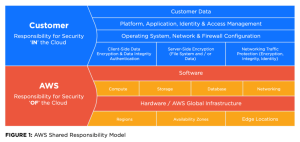
    Working within cloud environments requires CSPs, companies, employees, and clients to have a general understanding of the shared responsibility model. This model is a general framework for protection and regulation and defines the joint duties of CSPs and clients for ensuring comprehensive cloud security.

    The Amazon Web Services Shared Responsibility Model.

    Read more about the AWS Shared Responsibility Model HERE

    These days, the majority of organizations handle their business within the cloud and utilizing the cloud offers many benefits. What many organizations don’t realize is that they are the ones responsible for IAM (identity and access management) and security controls. The CSPs provide built-in security, but in reality, these security controls require activation and proper configuration by the organizations that use them.

    In the event of a cloud incident, an organization that hasn’t configured their data may not have access to the critical evidence needed to carry out an investigation.

    Cloud Threat Actors are Thriving 

    As of now, threat actors don’t have to try hard in order to be successful. Ideally, cloud environments should be properly configured so that data is readily available and preserved. Also, IAM should be effectively managed and CSP security controls should be manually activated. However, as of now, 99% of organizations struggle with cloud breaches because of misconfigurations and improper IAM policies. Cloud breaches have been increasing at an alarming rate and researchers have found that threat actors have many “low hanging fruit” to choose from. Improper configurations account for 70% of the identified cloud security incidents. Misconfigurations grant threat actors easy access into a cloud environment without needing to use techniques or exploit vulnerabilities; It’s essentially the same thing as leaving the key right in front of a locked door. Compared to complicated ransomware extortions, threat actors breaching cloud environments just need to destroy or steal sensitive data and credentials in order to make money.

    Make a Threat Actor’s Job Harder 

    The whole idea of IT security is to make a hacker’s job that much harder. As of now, a cloud hacker’s job is easy and many bad actors don’t need to use any advanced techniques to breach cloud environments. To safeguard their assets from cloud breaches, organizations should prioritize educating their employees about cloud technologies and properly facilitate IAM; This ensures that access to an org’s cloud environment is limited to authorized and authenticated personnel only, enabling them to conduct business securely. Proper setup of logging/monitoring can help in detecting breaches or security issues faster. The importance of cloud incident response playbooks and the mitigation of cloud risks has become increasingly vital, now more than ever.


    Alvaka is available 24×7 to assist you with any of your cybersecurity needs. Fill out the form on this page or call us at (949)428-5000!