
Blog

  • Navigating Stakeholder Communication in a Ransomware Crisis

    Navigating Stakeholder Communication in a Ransomware Crisis

    Understanding the Impact of Ransomware on Business Communication

    Ransomware represents a formidable threat to the integrity of business operations, with its ability to cripple the essential communication channels that companies rely on to connect with stakeholders. In today’s digital landscape, the question is not if, but when an organization will confront this type of cyber emergency. As we at Alvaka underscore the centrality of resilience and readiness, it’s paramount to grasp the full scope of damage ransomware can inflict on internal and external dialogues. Our proactive stance is not merely about defense but about sustaining fluid communication during these crises, ensuring that trust and transparency remain unhindered.

    The Immediate Steps to Take When a Ransomware Attack Occurs

    Upon detection of a ransomware attack, the swift mobilization of IT management teams is critical. An effective response starts with isolating infected systems to contain the spread and mitigate damage. Simultaneously, our specialists engage in assessing the breach’s scope and securing backup data reservoirs. These initial steps are foundational, setting the stage for informed and strategic communications. At Alvaka, we recognize the value of early and decisive action, as it directly correlates to the preservation of stakeholder confidence and the minimization of operational downtime.

    Ransomware Crisis Communication: Strategizing Stakeholder Engagement

    Amidst a cyber emergency, deploying a considered approach to stakeholder communication is as vital as the technical response. Crafting a communication plan that addresses the needs and concerns of each stakeholder group is an exercise in precision and foresight. We prioritize clarity and responsibility, ensuring that our messaging is both accurate and empathetic. This preparation is not an afterthought but a core aspect of our crisis management protocol. It empowers us to deliver critical updates with confidence, balancing the urgencies of the situation with the expectations of those we serve.

    Best Practices for Communicating with Stakeholders During a Ransomware Attack

    In the face of a ransomware attack, it’s essential to communicate effectively. At Alvaka, we adhere to a set of best practices designed to maintain integrity and trust with our stakeholders. From the outset, we aim to establish a single source of truth, preventing misinformation and speculation from compromising the narrative. Regular, transparent communication is maintained throughout the resolution process. By ensuring our stakeholders are informed and reassured, we not only manage the crisis but also reinforce the robustness of our relationships built on reliability and expertise.

    Identifying Your Key Stakeholders for Accurate Messaging

    When facing a crisis such as a ransomware attack, communication plays a pivotal role not only in crisis management but also in maintaining the trust of your key stakeholders. At Alvaka, we recognize that different stakeholders require tailored messaging, which ensures clarity and provides reassurance during these critical times. Identifying your stakeholders and understanding their unique concerns and information needs is the initial step towards effective engagement.

    Segmenting Stakeholders for Targeted Engagement

    Our approach begins with segmenting stakeholders into distinct groups. Broadly, these groups can include your customers, employees, investors, and business partners. Although they’re all important to your organization, each segment demands a specific approach to communication, particularly under the strain of a ransomware attack.

    In the context of best practices for communicating with stakeholders during a ransomware attack, here’s how we suggest you prioritize and address your key stakeholders:

    • Customers: They are the cornerstone of our operations. Their immediate concern will likely be the safety and privacy of their personal data. We get ahead of the situation by promptly informing them of the breach and the steps we’re taking to safeguard their interests.
    • Employees: As the inner wheel of our organization, employees must be apprised of the attack’s impact on operations. They should receive guidance on how to communicate the incident externally and understand their role in the recovery process.
    • Investors: They have financial interests at stake and hence, require transparent updates on the situation. Our goal is to demonstrate control and a clear path to resolution, reinforcing their confidence in our crisis management capabilities.
    • Business Partners: For supply chain integrity and business continuity, equipping partners with essential information is imperative. We collaborate closely with them to mitigate risks and resume normal operations as swiftly as possible.

    Maintaining sector-specific channels of communication with each group ensures that they all receive the information that’s crucial for their decision-making process without creating unnecessary panic.

    Incorporating Feedback Loops in Communication

    As we implement best practices for communicating with stakeholders during a ransomware attack, establishing two-way communication is vital. Therefore, we create feedback loops that allow stakeholders to reach out with concerns and questions. This process helps us address specific issues and adapt our communication strategy accordingly. It not only places emphasis on fostering transparency but also underscores a commitment to partnering with stakeholders through recovery and beyond.

    Our dedication to precise, thoughtful, and honest messaging reflects the core values of Alvaka. We stand firm in the notion that every crisis, when maneuvered with finesse and foresight, can be transformed into an opportunity to reinforce stakeholder trust and reaffirm our resilience.

    Did you know that during a ransomware attack, immediate identification of key stakeholders is crucial for tailored crisis communication, ensuring accurate and timely messaging to maintain trust?

    Communicating Effectively in the Face of Cyber Threats

    When faced with the chaos of a ransomware attack, effective communication is not just about immediate responses but also about fostering a sustainable, transparent relationship with your stakeholders in the aftermath. At Alvaka, we believe in turning adverse situations into opportunities to strengthen trust and demonstrate resilience. By following the best practices for communicating with stakeholders during a ransomware attack, we have outlined strategies that enable businesses to manage their messaging in a controlled and considerate manner.

    Post-incident analysis and communication are as crucial as the initial response. After containing and beginning the process of ransomware recovery, it’s imperative to carry out a thorough investigation to understand the attack’s vector, the data affected, and to improve defenses accordingly. Sharing this information with stakeholders not only shows transparency but also helps them understand the tangible steps being taken for both recovery and future prevention.

    Strengthening Trust Through Transparency and Updates

    In the wake of a ransomware incident, it’s understandable that stakeholders may feel anxious about the security of their data and the future of their collaboration with your business. As part of our commitment to excellence, we recommend maintaining open channels of communication. This allows for regular updates, which will enable stakeholders to stay informed on the progress of system restorations and security enhancements. Transparency fosters trust, and trust is the cornerstone of recovery and ongoing partnership.

    Evaluating the effectiveness of your communication during these times is also vital. As we navigate the complexities of IT management, we continuously learn and improve from each challenge. Adopting an iterative approach, where feedback from stakeholders is sought and incorporated into improving communication plans, can significantly enhance your business’s resilience against similar threats.

    Cultivating a Culture of Communication Excellence

    Ultimately, the true test of a business’s preparedness is not just in its technical defenses but also in the robustness of its communication strategy. At Alvaka, we reinforce the concept that every team member plays a role in effective communication, making it part of our organizational culture. By embedding the best practices for communicating with stakeholders during a ransomware attack into everyday operations, we ensure that all members are equipped to act cohesively, providing accurate and timely updates to stakeholders at critical moments.

    Moving forward from a ransomware attack, let the lessons learned reshape your communication protocols and business continuity plans. Consider conducting regular training for staff on ransomware awareness and crisis communication. Not only will this bolster your team’s ability to respond adeptly, but it will also demonstrate to stakeholders that your business is actively improving its stance against cyber threats and prioritizing their interests.

    By making communication a quintessential element of our business process and combining it with cutting-edge ransomware recovery solutions, we stand firm against cyber threats while ensuring our stakeholders remain confident in our abilities. Trust Alvaka to be your ally in navigating the complexities of cyber threats and stakeholder communication—your peace of mind is our utmost priority. For comprehensive expertise in crisis communication and ransomware defenses, remember that adopting the best practices for communicating with stakeholders during a ransomware attack is essential to safeguarding your business continuity.

    How can you communicate with stakeholders during a cyber attack?

    The Importance of Stakeholder Communication in Cybersecurity Excellence

    FAQ

    What is ransomware and how does it impact business communication?

    Ransomware is a type of malicious software that encrypts a victim’s files, rendering them inaccessible until a ransom is paid. For businesses, it can severely disrupt communication with clients, employees, and other stakeholders by incapacitating crucial communication tools and databases. Ensuring we have strong security measures in place is vital to prevent these interruptions.

    What immediate steps should our IT management team take following a ransomware attack?

    Immediately after detecting a ransomware attack, our IT management team should isolate the affected systems to prevent the malware from spreading. Next, they should secure backups and begin an assessment of the damage. Simultaneously, contacting law enforcement and informing stakeholders of the breach is crucial to maintaining transparency and trust.

    Why is a strategic communication plan important during a ransomware crisis?

    Having a strategic communication plan ensures that we effectively manage the flow of information during a ransomware crisis. Consequently, it helps maintain business continuity, uphold stakeholder trust, and allows for a coordinated response that can mitigate damage to our reputation. Importantly, the plan should be integral to our overall crisis management strategy.

    How do we identify key stakeholders for communication during a ransomware attack?

    To identify key stakeholders, we must evaluate who is impacted by our business and who influences our operations. This includes internal stakeholders like employees and external ones such as customers, partners, and investors. Once identified, we can tailor our communication to address their specific concerns and information needs during a crisis.

    What are best practices for ransomware preparedness in terms of communication?

    Best practices include regularly updating and testing our incident response and communication plans, conducting cybersecurity awareness training, and maintaining clear, preemptive communication channels with our stakeholders. Furthermore, having an established protocol for different communication scenarios ensures we’re not caught off guard.

    Should we negotiate with ransomware attackers or pay the ransom?

    Our approach is to avoid paying the ransom, as this doesn’t guarantee the return of our data and can encourage further criminal activity. Instead, we collaborate with law enforcement and rely on our robust disaster recovery and response plans. Prompt and transparent communication to stakeholders about this stance is essential during the crisis.

    How do we communicate with customers after a ransomware attack?

    After a ransomware attack, we communicate with customers promptly, providing them with accurate information about the situation and how it may affect them. We also offer clear guidance on protective measures they should take and make ourselves readily available to answer any questions, showing that we are proactive and supportive during the incident.

    What role does employee awareness play in ransomware crisis communication?

    Employee awareness is crucial; informed employees can serve as the first line of defense against an attack. Moreover, ensuring they are educated on the communication protocols helps maintain consistent and accurate messaging to all our stakeholders, which is key during a crisis.

    How can we maintain transparency with investors during and after a ransomware attack?

    We maintain transparency with investors by providing regular updates, being upfront about the impact of the attack, and detailing our response and recovery measures. This approach fosters investors’ confidence in our ability to manage the crisis and protects our business relationships and market reputation.

    What is the role of public relations in managing communication during a ransomware attack?

    Public relations play an integral part in managing external communication during a ransomware attack. It involves crafting clear, concise messages that inform the public and stakeholders about the situation and the steps we’re taking, all while managing our organization’s reputation and working to alleviate concerns that may arise.


    Alvaka is available 24×7 to assist you with any of your cybersecurity needs. Fill out the form on this page or call us at (949)428-5000!
  • Crafting Your Ransomware Response Strategy for Home Networks

    Crafting Your Ransomware Response Strategy for Home Networks

    Understanding Ransomware and Its Impact on Home Networks

    In today’s interconnected world, ransomware has emerged as a formidable threat to the sanctity of our personal digital domains. Defined as malicious software designed to block access to a computer system or data until a sum of money is paid, ransomware can infiltrate and cripple our home networks, holding our most treasured digital assets hostage. As we increasingly store sensitive information on our home devices, the impact of such an attack can range from inconvenient to downright catastrophic, potentially leading to loss of precious memories or critical personal data.

    The Importance of a Proactive Approach in Ransomware Protection

    At Alvaka, we stress that proactive defense is the cornerstone of any effective cybersecurity strategy. A ransomware incident response plan is not a luxury but a necessity in safeguarding against these digital extortion attempts. Historical data underscores the effectiveness of preparedness; home users who anticipate and strategize for ransomware encounters are far more successful at mitigating risks and minimizing damage. We advocate for a robust defensive posture that includes regular backups, software updates, and awareness training as foundational elements in deterring cyber attackers.

    How to Implement a Ransomware Incident Response Plan

    We know that when it comes to ransomware, time is of the essence. A meticulously crafted and readily executable incident response plan can be the difference between a minor disruption and a significant breach. In the following sections, we will guide you through the critical steps to equip your home network with a formidable line of defense. These steps will include establishing a reactive team, identifying and mitigating vulnerabilities in your network, and employing recovery mechanisms to bounce back from an incident swiftly and securely. The aptitude to anticipate, respond, and recover from ransomware incidents with agility underlines our commitment to upholding our clients’ digital safety and privacy.

    How to Implement a Ransomware Incident Response Plan

    Establishing Your Ransomware Incident Response Team

    At Alvaka, we understand the gravity of cyber threats and the havoc ransomware can unleash on your home network. That’s why we strongly advocate for the creation of a dedicated ransomware incident response team within your preparedness framework. Having a group of skilled individuals with clearly defined roles is your first line of defense against these daunting digital disruptions.

    We recommend assembling a versatile team with a diverse set of skills to address each aspect of a potential ransomware attack. Typically, this would include technical experts who can contain the attack, strategize the recovery process, and liaise with law enforcement if necessary.

    • An Incident Response Manager to oversee and coordinate the response efforts.
    • Security Analysts to identify the source and the extent of the attack.
    • IT Professionals equipped to execute technical countermeasures and restore systems.
    • A Communications Officer responsible for internal and external messaging about the incident.

    At Alvaka, we work together to ensure that each team member knows their responsibilities like the back of their hand. Furthermore, we encourage regular incident response simulations to foster a seamless response in the heat of a real crisis. An effective response team is proactive, responsive, and well-rehearsed; traits that we at Alvaka cultivate meticulously.

    Additionally, we emphasize the value of clear communication paths within the response team. Ensuring that team members are connected and informed at every stage is paramount. In the event of an attack, everyone should be ready to spring into action without hesitation. After all, in the realm of ransomware, time is often the most expensive currency.

    It’s also essential that our team stays current with the latest threat intelligence and ransomware defense strategies. We regularly update our skills through training sessions and incorporate new knowledge into our response plan. This way, we stay ahead of the curve, equipping ourselves with cutting-edge tactics to combat even the most sophisticated of ransomware schemes.

    Our readiness to respond to a ransomware incident goes beyond technical expertise. We believe in a comprehensive approach that incorporates legal and regulatory considerations. Therefore, we include legal advisors and compliance experts on our teams to guide us through the nuances of cyber law and the requirements for reporting and responding to authorities.

    Finally, we round out our ransomware incident response team with the engagement of external partners when necessary. This may include cyber insurance representatives, third-party cybersecurity firms, and other stakeholders who can offer additional support and capabilities during a crisis situation.

    Through careful planning and team development, we stand ready to defend our networks and guide our clients through the upheaval of a potential ransomware event. At Alvaka, our response plan isn’t just a document; it’s a dynamic blueprint for resilience in the face of burgeoning cyber threats.

    Did you know that 37% of global organizations reported being hit by ransomware in 2021? Establishing a dedicated response team is crucial for rapid action during such incidents.

    Ransomware Protection Strategies: A Comprehensive Guide

    Final Thoughts on How to Implement a Ransomware Incident Response Plan

    We’ve navigated through the essential steps of fortifying your home against the ever-present threat of ransomware, underlining the significance of readiness and quick action. It’s worth reiterating that ransomware doesn’t just target large corporations; it also threatens individual users and smaller home networks. Implementing a ransomware recovery strategy is not merely an IT best practice; it’s a crucial safeguard for your personal data and peace of mind.

    As we’ve established, preparing for a ransomware attack involves more than just the right software; it requires a holistic approach. From assembling a dedicated incident response team to continuous monitoring and education, each step is a building block towards a resilient defense. We have seen our proactive measures pay off for our clients time and again.

    Implementing Your Plan with Professional Support

    We understand the intricacies involved in crafting a robust ransomware incident response plan. Self-implementation can be daunting, which is why our expertise in network services and IT management is a resource you can rely on. Our professionals are equipped to guide you through each phase of your planning and response, ensuring that you’re never left unprepared in the face of a ransomware attack.

    As a final takeaway, remember the three R’s of ransomware defense: Recognize the threats, Respond with your plan, and Recover with minimal disruption. With these principles at the heart of your cybersecurity strategies and our assistance, you can face the digital world with confidence.

    Continuous Improvement and Future Steps

    The digital threat landscape is constantly evolving, and so should your incident response strategies. Continuous improvement through regular plan reviews and updates, expanding your team’s knowledge base, and adopting emerging technologies are key to staying ahead of ransomware attackers. Our commitment is to provide ongoing support and services that adapt to the latest threats, ensuring that your response plan remains current and effective.

    In navigating the complex terrain of cybersecurity, the success of how to implement a ransomware incident response plan hinges on a partnership between your vigilance as a user and our unmatched expertise. Stern challenges call for robust solutions, and together, we’re capable of not just facing the threats of today but of preempting those of tomorrow.

    FAQ

    What is ransomware and why should I be concerned about my home network?

    Ransomware is malicious software designed to encrypt files on a device, rendering them inaccessible until a ransom is paid. Home networks are increasingly targeted due to the growing number of connected devices, often with less security than corporate networks, putting personal data at risk.

    How can proactive measures help in protecting against ransomware?

    By taking proactive steps to secure your home network and devices, you can significantly reduce the risk of a ransomware attack. This includes regular software updates, using strong passwords, and educating all users on how to recognize phishing attempts, which can prevent ransomware from taking hold in the first place.

    What should be included in a ransomware incident response plan?

    An effective ransomware incident response plan should outline specific steps to detect, contain, and remediate a ransomware attack. It must also detail how to restore systems and data from backups and provide clear communication strategies to inform affected parties. Additionally, it should include regular updates and training to ensure all users are prepared.

    Who should be on my ransomware incident response team?

    Your team should include individuals with roles in IT security, system administration, and user support. Furthermore, depending on your needs, you may incorporate legal counsel and public relations professionals to manage external communications and potential legal implications. Family members who use the home network should also be informed and know their responsibilities.

    How often should I update my ransomware response plan?

    Your plan should be reviewed and updated regularly, at least annually or whenever significant changes occur in your home network or cybersecurity landscape. This ensures your plan remains effective and aligned with the latest defense strategies against evolving ransomware threats.

    Can regular backups protect me from ransomware?

    Yes, regular backups are a cornerstone of any ransomware protection strategy. They enable you to restore your data without paying the ransom, as long as backups are kept secure and are not connected to your network at all times.

    What are the first steps to take when I suspect a ransomware attack?

    Initially, you should isolate the affected device from your network to prevent the spread of ransomware. Then, shut down any potentially impacted systems, and contact your incident response team to begin assessing and mitigating the attack.

    Should I ever consider paying the ransom?

    We strongly advise against paying the ransom, as it does not guarantee the return of your data and encourages criminal activity. Instead, focus on following your incident response plan to restore your system and data from backups and seek assistance from cybersecurity professionals if necessary.

    What kind of training should I provide to my household to prevent ransomware attacks?

    Training should cover how to identify phishing emails, the importance of not downloading suspicious attachments or clicking on unknown links, and the necessity of maintaining up-to-date security practices for all devices connected to your home network. Reinforcement of this training should occur periodically.

    Is it necessary to have security software installed on all my home devices?

    Definitely, security software is crucial in providing a line of defense against ransomware and other cybersecurity threats. It should be installed and kept updated on all devices that connect to your home network, including mobile phones and tablets.


    Alvaka is available 24×7 to assist you with any of your cybersecurity needs. Fill out the form on this page or call us at (949)428-5000!

  • Top Ransomware Mitigation Strategies for Businesses Unveiled

    Top Ransomware Mitigation Strategies for Businesses Unveiled

    Understanding the Threat Landscape of Ransomware

    In an era where digital assets are integral to the operational integrity of businesses, the threat landscape of ransomware has become increasingly treacherous. As we delve into the complexities and escalating prevalence of ransomware attacks, it’s apparent that no business is immune to the cybercriminals’ gaze. At Alvaka, we understand the multifaceted nature of these threats and underscore the necessity for robust cybersecurity measures. Given the sophistication of recent attacks, our strategies are tailored to anticipate and counteract the persistence of these cyber adversaries.

    The Imperative for Proactive Ransomware Defense

    For businesses today, adopting a proactive approach to cybersecurity is not a luxury—it’s a necessity. Ransomware attacks have demonstrated the capacity to inflict severe financial and operational damage. The repercussions of inadequate security reach far beyond monetary loss, extending to the erosion of customer trust and long-term reputational harm. Our philosophy is clear: proactive defense is the cornerstone of digital asset protection. We prioritize not only the fortification of our clients’ networks but also strive to cultivate a culture of cybersecurity awareness and resilience.

    Identifying Key Ransomware Mitigation Strategies for Businesses

    Recognizing top ransomware mitigation strategies for businesses is essential in our commitment to safeguarding digital landscapes. Our approach is informed by cutting-edge industry knowledge and best practices, ensuring that we stay ahead of the evolving threats. The content we provide is designed not just to inform but to empower businesses with actionable insights—supporting their efforts to proactively shield their digital assets against ransomware threats. By partnering with us, businesses gain access to a wealth of expertise that aligns with their need for exemplary IT management and network services.

    Strengthening Network Security Against Ransomware

    Implementing Access Control Measures

    At Alvaka, we understand that safeguarding digital assets starts with robust network security. Consequently, we employ strict access control measures to mitigate unauthorized access risks. By ensuring that only authorized individuals have access to sensitive data, we effectively reduce the attack surface. Our approach includes the principle of least privilege, where users are granted the minimum access necessary to perform their job functions. As a result, in the unfortunate event of a security breach, the potential damage is considerably minimized.

    Deploying Advanced Threat Detection Tools

    We continuously monitor our network for any signs of suspicious activity with advanced threat detection tools. Our proactive measures enable us to identify and respond to threats swiftly, ensuring the integrity of our client’s digital infrastructure. As part of our top ransomware mitigation strategies for businesses, we maintain cutting-edge antivirus and malware solutions that are regularly updated to defend against the latest ransomware variants. Additionally, our skilled IT team works tirelessly to stay abreast of emerging threats and fine-tunes our systems to deflect potential risks.

    Continuous Security Training and Awareness Programs

    Ransomware often infiltrates systems through human error or lack of awareness. This is why at Alvaka, we prioritize continuous security training and awareness programs for all team members. Our comprehensive training modules are designed to heighten awareness of phishing schemes, social engineering tactics, and other methods that adversaries employ. With an informed team, we considerably strengthen our defenses and maintain a vigilant workforce as an integral part of our top ransomware mitigation strategies for businesses.

    Securing Endpoints and Maintaining Software Updates

    To bolster our ransomware defense, we also focus on securing endpoints and maintaining software updates. We ensure that each device connected to our network, from servers to smartphones, is safeguarded with the latest security patches and updates. Moreover, we deploy endpoint protection solutions that can stop ransomware at its entry points, preventing it from ever taking root in our network.

    • Access control with minimum privilege standards
    • Continuous monitoring for proactive threat detection
    • Ongoing staff education on cybersecurity best practices
    • Meticulous endpoint protection and software maintenance

    Crafting Incident Response and Business Continuity Plans

    Recognizing that even the best defenses may be compromised, Alvaka develops comprehensive incident response and business continuity plans. These strategies encompass not only immediate actions to contain and eradicate threats but also long-term solutions to maintain business operations with minimal disruption. We regularly conduct drills and simulations to test and refine these plans to ensure they are effective when faced with a real-world ransomware attack. Consequently, our readiness and resilience stand as testament to our commitment to our clients’ business continuity and the protection of their digital assets.

    Did you know that regular, secure, and tested backup protocols can drastically reduce the damages caused by ransomware attacks on businesses, ensuring swift recovery and continuity?

    Strengthening Digital Resilience: Advanced Ransomware Mitigation Strategies for Businesses

    In the evolving landscape of cyber threats, ransomware attacks remain a formidable challenge for businesses across the globe. As we navigate this terrain, it is clear that implementing top ransomware mitigation strategies is not just recommended; it is imperative for the safeguarding of digital assets and the continuity of operations. We at Alvaka have committed ourselves to providing cutting-edge solutions and actionable guidance to ensure that your organization remains resilient in the face of these ever-present risks.

    Commitment to Excellence in Ransomware Defense

    With our extensive experience and expertise, we understand the intricacies of ransomware attacks and the devastating impact they can have on businesses. Our dedication to excellence in all aspects of IT management and network services has positioned us as leaders in the field, keenly focused on delivering only the most effective defense mechanisms against such malicious threats.

    Partnering with Alvaka for Enhanced Security

    In partnering with us, you’re not just adopting top ransomware mitigation strategies for businesses; you’re embracing a culture of security that permeates every layer of your organization. Our proactive stance means that we continually assess and refine our approaches to ensure they meet the high standards necessary to thwart advanced ransomware attacks. Our comprehensive solutions encompass rigorous security protocols, advanced threat detection systems, and continuous monitoring to ensure that your business remains protected at all times.

    Moreover, in the unfortunate event of an attack, we underscore the importance of a swift and effective ransomware recovery process. Our team is equipped with the tools and knowledge to not only restore your operations promptly but also to fortify your defenses to prevent future incidents. Ransomware recovery is not about mere restoration; it’s about learning, adaptation, and enhancement of your cyber defenses.

    Empowering Businesses with Knowledge and Tools

    Lastly, we believe in empowering our clients through education and the provision of state-of-the-art tools necessary to detect, prevent, and respond to ransomware threats. We stand with you, ready to provide the support and expertise required to navigate the challenges of ransomware. It is our mission to see your business thrive, secure in the knowledge that it is well-protected against the tide of cyber threats.

    Incorporating top ransomware mitigation strategies for businesses into your security posture is not only a strategic move but a vital one. We at Alvaka are here to guide you on this path, ensuring that your digital assets are safeguarded, and your business is equipped to face and overcome the challenges posed by ransomware. Together, we will ensure that your business’s digital future is secure.

    FAQ

    What is ransomware and how does it impact businesses?

    Ransomware is a type of malicious software that infects computer systems, encrypts data, and demands ransom for decryption keys. For businesses, ransomware can halt operations, lead to loss of sensitive data, and cause significant financial and reputational damage. It’s crucial for firms to understand this threat to implement effective defenses.

    Why is a proactive approach to ransomware defense essential?

    Adopting a proactive approach to ransomware defense is essential as it helps businesses prevent attacks before they occur. Proactively implementing strong security measures and planning can significantly reduce the risk of successful ransomware infiltration and the subsequent financial and reputation damages.

    How often should we back up our data to protect against ransomware?

    You should back up data regularly, with the frequency depending on the volatility and importance of the data. Ideally, critical data should be backed up daily, if not more frequently. Furthermore, it’s imperative that backups are tested regularly to ensure they are effective in a disaster recovery scenario.

    What makes a strong recovery plan for ransomware attacks?

    A strong recovery plan involves not only regular backups but also clearly defined steps for restoring systems from those backups. It should include a hierarchy of critical assets for restoration, communication protocols for stakeholders, and regular drills to ensure effectiveness. Additionally, the recovery plan should be periodically reviewed and updated to align with new threats and business changes.

    Can ransomware spread through a network, and how can we prevent it?

    Yes, ransomware can spread across networks to infect multiple devices. To prevent this, businesses should segment networks, apply strict access controls, keep systems updated, and use advanced threat detection tools. This strategy limits the potential spread and impact of ransomware should an infiltration occur.

    What role do employees play in ransomware mitigation strategies?

    Employees play a crucial role in mitigating ransomware risks. Providing comprehensive cybersecurity training can empower them to recognize and avoid phishing emails, suspicious links, or websites that are common ransomware vectors. Continuously educating staff on cybersecurity best practices is a line of defense that should not be underestimated.

    Should we pay the ransom if we are affected by a ransomware attack?

    We advise against paying the ransom, as it does not guarantee data recovery and may encourage further attacks. Instead, focus on your recovery plan, seek assistance from cybersecurity professionals, and report the incident to law enforcement. By not paying the ransom, you are also helping to disincentivize the ransomware economy.

    What cybersecurity tools should we use to prevent ransomware attacks?

    To prevent ransomware attacks, use a layered approach to cybersecurity. This should include firewalls, antivirus and anti-malware software, email filtering solutions, and intrusion detection systems. Additionally, consider employing advanced tools like endpoint detection and response (EDR) and network traffic analysis to identify and mitigate threats swiftly.

    How do we ensure that our backup and recovery plan is effective against ransomware?

    To ensure your backup and recovery plan is effective, regularly test your backups for integrity and restorability. Additionally, maintain offline or immutable backups to prevent backup compromise, and update your plan to adapt to new threats and organizational changes. Lastly, continuously improve your plan based on testing results and recovery exercises.

    Is cyber insurance worth considering for ransomware protection?

    Cyber insurance can be a valuable part of a comprehensive risk management strategy, covering losses and expenses associated with ransomware attacks. It’s important to carefully review what a policy covers and whether it aligns with your business’s risk profile. Consult with insurance and cybersecurity experts to determine if cyber insurance meets your needs.


    Alvaka is available 24×7 to assist you with any of your cybersecurity needs. Fill out the form on this page or call us at (949)428-5000!

  • Defending Against Rhysida: Understanding the Role of Cobalt Strike in Modern Ransomware Attacks

    Defending Against Rhysida: Understanding the Role of Cobalt Strike in Modern Ransomware Attacks

    The landscape of cybersecurity is ever-evolving, with new threats emerging and existing ones becoming more sophisticated. Among the most concerning threats today is the Rhysida ransomware gang, known for leveraging advanced tools like Cobalt Strike to launch devastating attacks across various industries.

    Understanding Cobalt Strike

    Cobalt Strike is a legitimate penetration testing tool designed to simulate real-world cyber attacks. It provides security professionals with a suite of tools to test their networks’ defenses and identify vulnerabilities. However, its powerful features have made it a favorite among cybercriminals, including the Rhysida gang, who repurpose it for malicious activities.

    Key Features of Cobalt Strike

    1. Lateral Movement: Enables attackers to move laterally within a network, exploring connected systems and expanding their reach beyond the initial point of compromise.
    2. Command and Control (C2): The tool allows attackers to establish a covert communication channel between infected systems and their command servers, making detection challenging.
    3. Post-Exploitation Capabilities: Provides features for credential theft, privilege escalation, and data exfiltration, enhancing the attacker’s ability to cause significant damage.

    Rhysida’s Use of Cobalt Strike

    The Rhysida ransomware gang has been increasingly active, employing Cobalt Strike to execute sophisticated attacks that disrupt businesses and compromise sensitive data. By using Cobalt Strike, Rhysida can efficiently gain control over victim networks and deploy their ransomware payload.

    Attack Methodology

    1. Initial Access: Rhysida often begins with phishing emails containing malicious links or attachments. Once a user clicks, the attackers deploy Cobalt Strike to gain a foothold in the network.
    2. Network Reconnaissance: After establishing initial access, Rhysida uses Cobalt Strike to map the network and identify high-value targets.
    3. Lateral Movement and Escalation: Cobalt Strike facilitates the spread of the attack across the network, allowing Rhysida to escalate privileges and access critical systems.
    4. Ransomware Deployment: Once the network is sufficiently compromised, Rhysida deploys their ransomware, encrypting data and demanding payment for its release.

    Strategies for Defense

    Given the increasing prevalence of ransomware attacks, organizations must adopt robust defense strategies to protect against threats like Rhysida and their use of Cobalt Strike.

    1. Employee Training and Awareness
    • Phishing Awareness: Regular training sessions to educate employees about phishing tactics can significantly reduce the risk of initial compromise.
    • Security Best Practices: Encourage strong password policies and the use of multi-factor authentication to enhance security.
    1. Network Segmentation
    • Limit Lateral Movement: Segmenting the network into smaller, isolated units can help contain an attack and prevent it from spreading.
    • Access Controls: Implement strict access controls to ensure users have only the necessary permissions for their roles.
    1. Advanced Threat Detection
    • Behavioral Analytics: Utilize tools that analyze network traffic patterns to identify suspicious behavior indicative of a Cobalt Strike intrusion.
    • Endpoint Detection and Response (EDR): Deploy EDR solutions to monitor endpoints for malicious activities and provide real-time alerts.
    1. Regular Security Audits and Penetration Testing
    • Vulnerability Assessments: Conduct regular audits to identify and remediate vulnerabilities that could be exploited by attackers.
    • Simulated Attacks: Engage in penetration testing to evaluate the effectiveness of security measures and improve incident response capabilities.
    1. Incident Response Planning
    • Response Teams: Establish a dedicated incident response team trained to handle ransomware attacks.
    • Disaster Recovery: Maintain regular backups of critical data and ensure they are stored offline to prevent ransomware encryption.

    The Rhysida ransomware gang’s use of Cobalt Strike underscores the importance of staying vigilant and proactive in cybersecurity efforts. By understanding the tools and tactics employed by modern ransomware groups, organizations can better defend against these threats and minimize the risk of a successful attack. Implementing comprehensive security measures and fostering a culture of cybersecurity awareness are essential steps in protecting valuable assets and ensuring business continuity in the face of evolving cyber threats.


    Alvaka is available 24×7 to assist you with any of your cybersecurity needs. Fill out the form on this page or call us at (949)428-5000!

  • The Technology Behind Rhysida: Exploring Their Use of Advanced Encryption Methods

    The Technology Behind Rhysida: Exploring Their Use of Advanced Encryption Methods

    The Rhysida ransomware gang has gained notoriety for their sophisticated attacks that employ advanced encryption techniques to lock victims’ data and demand ransom payments. Understanding the encryption methods used by Rhysida is crucial for developing effective defense strategies and ensuring the protection of sensitive information.

    Rhysida’s Encryption Methods

    Rhysida employs a combination of encryption algorithms to ensure their ransomware is both secure and effective. Their approach involves using strong cryptographic techniques that make decryption without a ransom payment extremely challenging.

    Key Encryption Technologies

    1. ChaCha20: Rhysida utilizes the ChaCha20 encryption algorithm, known for its speed and security. This stream cipher is particularly effective in encrypting large amounts of data quickly, making it a preferred choice for ransomware groups​ (Barrcuda Blog)​​ (Avast Threat Labs)​.
    2. RSA Encryption: In addition to ChaCha20, Rhysida uses RSA encryption to secure the encryption keys themselves. This asymmetric encryption method ensures that only the attackers can decrypt the data without the corresponding private key, which is held by the attackers​ (Trend Micro)​​ (Avast Threat Labs)​.
    3. Hybrid Encryption: Rhysida combines symmetric and asymmetric encryption methods in a hybrid approach. The ChaCha20 algorithm encrypts the files, while RSA encryption protects the keys needed for decryption, maximizing both security and efficiency​ (Avast Threat Labs)​​ (Check Point Research)​.

    Impact of Advanced Encryption

    The use of advanced encryption methods by Rhysida not only increases the complexity of their attacks but also makes recovery more difficult for victims. Organizations affected by Rhysida face significant challenges, including data loss, operational disruptions, and potential financial losses if they choose to pay the ransom.

    Challenges in Decryption

    1. Strong Encryption: The robustness of ChaCha20 and RSA encryption makes unauthorized decryption nearly impossible without the keys, forcing victims to either pay the ransom or rely on backups if available​ (Trend Micro)​​ (Avast Threat Labs)​.
    2. Data Integrity Risks: The encryption process can sometimes lead to data corruption or loss, especially if the attack is interrupted or if the decryption process is not correctly followed​ (Barrcuda Blog)​​ (Check Point Research)​.

    Strategies for Protection

    Given the complexity and effectiveness of Rhysida’s encryption methods, organizations must adopt comprehensive security measures to protect their data and minimize the risk of ransomware attacks.

    1. Regular Data Backups
    • Frequent Backups: Implement regular data backup routines to ensure that recent copies of critical data are available for restoration in case of an attack.
    • Offline Storage: Store backups offline or in a secure cloud environment to prevent them from being encrypted by ransomware​ (Barrcuda Blog)​​ (Trend Micro)​.
    1. Network Security Enhancements
    • Encryption of Sensitive Data: Encrypt sensitive data using strong encryption algorithms to protect it from unauthorized access, even if it is exfiltrated​ (Avast Threat Labs)​​ (Check Point Research)​.
    • Network Segmentation: Divide the network into isolated segments to limit the spread of ransomware and contain potential breaches​ (Barrcuda Blog)​.
    1. Endpoint Protection and Monitoring
    • Advanced Threat Detection: Use endpoint detection and response (EDR) solutions to identify and respond to ransomware threats in real time​ (Trend Micro)​​ (Avast Threat Labs)​.
    • Continuous Monitoring: Implement continuous network monitoring to detect unusual activities that may indicate a ransomware attack​ (Barrcuda Blog)​​ (Check Point Research)​.
    1. Incident Response Planning
    • Preparedness: Develop and regularly update an incident response plan that includes specific procedures for responding to ransomware attacks​ (Trend Micro)​​ (Avast Threat Labs)​.
    • Team Training: Conduct regular training sessions for incident response teams to ensure they are equipped to handle ransomware incidents effectively​ (Check Point Research)​.

    The Rhysida ransomware gang’s use of advanced encryption methods highlights the importance of understanding and preparing for sophisticated cyber threats. By implementing robust security measures, organizations can defend against these attacks and ensure the safety of their critical data. Staying informed about the latest encryption technologies and threat landscapes is essential for maintaining a strong cybersecurity posture in today’s digital environment.


    Alvaka is available 24×7 to assist you with any of your cybersecurity needs. Fill out the form on this page or call us at (949)428-5000!

  • Proactive Protection: How to Prepare Your Organization Against Rhysida’s Tactics

    Proactive Protection: How to Prepare Your Organization Against Rhysida’s Tactics

    In today’s digital landscape, ransomware attacks are becoming more frequent and sophisticated, with groups like the Rhysida ransomware gang leveraging advanced tactics to infiltrate and disrupt businesses. Preparing your organization to defend against these threats requires a proactive and comprehensive approach. This article outlines key strategies to safeguard your organization against Rhysida’s tactics, ensuring resilience and continuity in the face of potential cyber attacks.

    Understanding Rhysida’s Tactics

    Rhysida is known for its use of sophisticated tools and strategies to gain access to networks, encrypt valuable data, and demand ransom payments. Their methods include leveraging tools such as Cobalt Strike for lateral movement, using phishing emails for initial access, and employing advanced encryption techniques like ChaCha20 and RSA to secure their operations​ (Barrcuda Blog)​​ (Trend Micro)​​ (Check Point Research)​.

    Key Tactics Used by Rhysida

    1. Phishing Attacks: Rhysida often initiates attacks with phishing emails that trick employees into clicking malicious links or downloading infected attachments​ (Trend Micro)​​ (Avast Threat Labs)​.
    2. Lateral Movement: After gaining initial access, Rhysida uses tools like Cobalt Strike to move laterally within the network, identifying and compromising additional systems​ (Avast Threat Labs)​​ (Check Point Research)​.
    3. Advanced Encryption: The use of strong encryption algorithms ensures that once data is encrypted, it is nearly impossible to recover without paying the ransom​ (Barrcuda Blog)​​ (Trend Micro)​.

    Proactive Protection Strategies

    Implementing a proactive cybersecurity strategy involves multiple layers of defense, focusing on prevention, detection, and response to potential threats. Here are key strategies to protect your organization against Rhysida’s tactics:

    1. Employee Training and Awareness
    • Phishing Prevention: Conduct regular training sessions to educate employees about the dangers of phishing and how to identify suspicious emails​ (Barrcuda Blog)​​ (Check Point Research)​.
    • Security Protocols: Encourage adherence to security protocols, including the use of strong passwords and multi-factor authentication to enhance security​ (Avast Threat Labs)​.
    1. Robust Network Security
    • Network Segmentation: Divide your network into isolated segments to limit the spread of malware and contain potential breaches​ (Trend Micro)​​ (Check Point Research)​.
    • Firewall and Intrusion Detection Systems: Implement firewalls and intrusion detection systems to monitor network traffic and identify suspicious activities​ (Barrcuda Blog)​.
    1. Endpoint Protection and Monitoring
    • Endpoint Security Solutions: Deploy advanced endpoint security solutions to detect and block ransomware threats in real time​ (Avast Threat Labs)​​ (Check Point Research)​.
    • Continuous Monitoring: Establish continuous monitoring of network activities to quickly identify and respond to potential threats​ (Trend Micro)​.
    1. Regular Data Backups
    • Frequent Backups: Schedule regular backups of critical data to ensure you have recent copies available for recovery in case of an attack​ (Barrcuda Blog)​​ (Avast Threat Labs)​.
    • Secure Backup Storage: Store backups offline or in a secure cloud environment to prevent them from being targeted by ransomware​ (Trend Micro)​.
    1. Incident Response Planning
    • Incident Response Team: Form a dedicated incident response team equipped to handle ransomware incidents effectively​ (Check Point Research)​.
    • Regular Drills: Conduct regular incident response drills to ensure your team is prepared to act swiftly in the event of an attack​ (Barrcuda Blog)​.
    1. Patch Management
    • Regularly update and patch all software: Update and patch ALL software including operating systems and applications
    • Keep your systems current with the latest patches. This significantly reduces the risk of attackers exploiting known vulnerabilities to launch ransomware attacks.

    As ransomware threats continue to evolve, organizations must adopt a proactive approach to cybersecurity to defend against groups like Rhysida. By implementing comprehensive security measures and fostering a culture of awareness and preparedness, businesses can mitigate the risk of attacks and ensure the safety and integrity of their data. Staying informed about the latest threats and continuously improving security practices are crucial steps in maintaining resilience in the face of cyber threats.


    Alvaka is available 24×7 to assist you with any of your cybersecurity needs. Fill out the form on this page or call us at (949)428-5000!

  • New SharpRhino Malware Being Used By Ransomware Gangs to Attack IT Workers

    New SharpRhino Malware Being Used By Ransomware Gangs to Attack IT Workers

    The Hunters International ransomware group, believed to be a rebranding of the Hive ransomware group due to code similarities, is targeting IT workers with their new malware, SharpRhino. This C# remote access trojan (RAT) enables attackers to infiltrate systems, escalate privileges, execute PowerShell commands, and ultimately deploy ransomware payloads. SharpRhino is distributed via a typo-squatting site that impersonates the legitimate Angry IP Scanner website, a tool frequently used by IT professionals​ (BleepingComputer)​​ (Cyber Security News)​​ (Help Net Security)​.

    If you need immediate assistance, call our 24-hour number at 1-877-662-6624 to reach a live engineer. He will get the process started for you or e-mail restore@alvaka.net.

    Technical Details

    SharpRhino is delivered as a digitally signed 32-bit installer (ipscan-3.9.1-setup.exe), containing a self-extracting password-protected 7z archive with files necessary for infection. Once executed, the malware performs several actions to establish persistence and control over the infected system:

    • Registry Modification: It modifies the Windows registry to ensure persistence by launching Microsoft.AnyKey.exe, a legitimate Microsoft Visual Studio binary repurposed for malicious use​ (Cyber Security News)​​ (Help Net Security)​.
    • PowerShell Execution: The malware drops LogUpdate.bat, which executes PowerShell scripts that compile C# code into memory, facilitating stealthy execution without leaving traces on disk​ (BleepingComputer)​​ (Cyber Security News)​.
    • Command and Control (C2): SharpRhino creates two directories (C:\ProgramData\Microsoft: WindowsUpdater24 and LogUpdateWindows) for C2 communication. The malware contains hardcoded commands such as delay, which sets the timer for the next POST request, and exit, which terminates communication​ (BleepingComputer)​​ (Cyber Security News)​.

    Impact

    Hunters International has already targeted several high-profile organizations, including Austal USA, Hoya, Integris Health, and the Fred Hutch Cancer Center. These attacks demonstrate the group’s focus on critical sectors and organizations with high ethical standards. In 2024 alone, they have claimed responsibility for 134 ransomware attacks globally, excluding the Commonwealth of Independent States (CIS), making them the tenth most active ransomware group​ (BleepingComputer)​​ (Help Net Security)​.

    Mitigation Strategies

    To mitigate the risk posed by SharpRhino and similar ransomware attacks, organizations should consider the following proactive measures:

    1. Awareness and Education: Train employees, especially IT staff, to recognize phishing attempts and the risks of downloading software from unofficial sources. Encourage the use of ad blockers to reduce exposure to malicious ads​ (Cyber Security News)​​ (Help Net Security)​.
    2. Secure Backups: Implement a robust backup strategy, ensuring backups are stored offline or in a secure cloud environment to prevent them from being encrypted during an attack​ (BleepingComputer)​.
    3. Network Segmentation: Segment the network to limit the spread of malware within the organization and protect critical systems from lateral movement​ (Cyber Security News)​.
    4. Regular Updates and Patches: Keep all software up to date with the latest security patches to minimize vulnerabilities that could be exploited by attackers​ (BleepingComputer)​​ (Help Net Security)​.
    5. Security Monitoring: Utilize advanced threat detection tools to monitor network traffic and detect anomalous activities indicative of a malware infection​ (Cyber Security News)​​ (Help Net Security)​.

    By implementing these strategies, organizations can strengthen their defenses against sophisticated ransomware threats like SharpRhino and minimize potential damage.

    For further details on the technical aspects and mitigation strategies for SharpRhino, refer to sources such as BleepingComputer and Help Net Security.

    If you need immediate assistance, call our 24-hour number at 1-877-662-6624 to reach a live engineer. He will get the process started for you or e-mail restore@alvaka.net.


    Alvaka is available 24×7 to assist you with any of your cybersecurity needs. Fill out the form on this page or call us at (949)428-5000!

  • Understanding Rhysida Ransomware: A Comprehensive Guide to This Emerging Threat

    Understanding Rhysida Ransomware: A Comprehensive Guide to This Emerging Threat

    In the ever-evolving landscape of cybersecurity threats, ransomware continues to be a prominent weapon used by cybercriminals to disrupt businesses and organizations. Among the latest ransomware families making headlines is Rhysida, a sophisticated strain that leverages advanced tools and techniques such as Cobalt Strike, PSExec, SILENTKILL, and ChaCha20 encryption. This ransomware gang is quite sophisticated and is specifically targeting what they deem to be high value targets. This blog provides an in-depth look at Rhysida ransomware, its attack methods, and how organizations can protect themselves from this emerging threat. For immediate assistance, please call our 24-hour hotline at 1-877-662-6624 to speak directly with a live engineer who will initiate the process for you. Alternatively, you can email us at restore@alvaka.net.

    What is Rhysida Ransomware?

    First appearing in May 2023, Rhysida ransomware is a relatively new but rapidly spreading malware that encrypts data on infected systems, demanding a ransom for decryption. Like many modern ransomware variants, Rhysida uses double extortion tactics—where attackers not only encrypt data but also threaten to release sensitive information if the ransom is not paid. This makes the threat of Rhysida particularly damaging, as it can lead to both financial loss and reputational damage for the affected organization.

    Key Technologies Used in Rhysida Attacks

    To understand the severity of Rhysida ransomware, it’s essential to explore the key technologies and tools that attackers use in their campaigns:

    1. Cobalt Strike:
      • Cobalt Strike is a legitimate penetration testing tool that has been co-opted by cybercriminals for malicious purposes. In Rhysida attacks, Cobalt Strike is often used to establish a foothold within a network, allowing attackers to execute commands remotely, move laterally across systems, and deploy ransomware payloads.
    2. PSExec:
      • PSExec is another legitimate tool commonly used by IT administrators to execute processes on remote systems. In the hands of Rhysida attackers, PSExec is weaponized to distribute ransomware across multiple endpoints within an organization, increasing the speed and scale of the attack.
    3. SILENTKILL:
      • SILENTKILL is a technique employed by attackers to disable security mechanisms and antivirus software on the target system. By neutralizing these defenses, Rhysida ransomware can operate undetected, significantly increasing the chances of a successful attack.
    4. ChaCha20 Encryption:
      • ChaCha20 is a fast and secure encryption algorithm used by Rhysida to encrypt victim data. Known for its speed and security, ChaCha20 makes it difficult for victims to decrypt their data without the attacker’s decryption key, thus forcing them to consider paying the ransom.

    The Attack Process

    Rhysida ransomware typically begins with an initial intrusion, often through phishing emails or exploiting vulnerabilities in public-facing applications. Once inside the network, attackers use Cobalt Strike to establish a command-and-control (C2) channel, allowing them to explore the network and identify valuable data.

    PSExec is then employed to deploy the ransomware payload across multiple systems. After the payload is executed, SILENTKILL techniques are used to disable security software, ensuring that the ransomware can encrypt files without interference. The final step involves encrypting the victim’s data using ChaCha20, followed by a ransom note demanding payment in exchange for the decryption key.

    Impact and Consequences

    The impact of a Rhysida ransomware attack can be devastating. In addition to the potential financial loss from paying the ransom, organizations may face significant downtime, loss of critical data, and damage to their reputation. The double extortion tactic employed by Rhysida also increases the pressure on victims, as the threat of sensitive data being leaked can lead to legal and regulatory consequences.

    Protecting Against Rhysida Ransomware

    Given the advanced techniques used in Rhysida attacks, organizations must take proactive steps to protect themselves. Here are some key strategies:

    1. Regularly Update and Patch Systems:
      • Ensure that all systems, applications, and software are up-to-date with the latest security patches to prevent exploitation of known vulnerabilities.
    2. Implement Multi-factor Authentication (MFA)
      • Implementing MFA is one of the most effective ways to protect against unauthorized access. Even if an attacker compromises a password, they will need a second form of authentication—such as a mobile app (Duo Security) or hardware token—to gain access. MFA significantly reduces the risk of privilege escalation and lateral movement within a network.
    3. Employee Training:
      • Conduct regular cybersecurity training to educate employees about the dangers of phishing emails and how to recognize suspicious activity.
    4. Network Segmentation:
      • Implement network segmentation to limit the spread of ransomware within your organization. This can help contain the attack to a specific segment, reducing overall damage.
    5. Backup and Recovery:
      • Regularly back up critical data and ensure that backups are stored securely and offline. This allows for data recovery without paying the ransom if an attack occurs.
    6. Incident Response Planning:
      • Develop and maintain a robust incident response plan that includes specific protocols for responding to ransomware attacks. Ensure that your response team is well-trained and prepared to act quickly.

    Rhysida ransomware represents a significant threat to organizations worldwide, leveraging advanced tools and techniques to maximize its impact. Understanding the technologies used in Rhysida attacks, such as Cobalt Strike, PSExec, SILENTKILL, and ChaCha20 encryption, is crucial for developing effective defense strategies. By staying informed and implementing best practices in cybersecurity, organizations can mitigate the risks associated with this and other ransomware threats.

    For immediate assistance, please call our 24-hour hotline at 1-877-662-6624 to speak directly with a live engineer who will initiate the process for you. Alternatively, you can email us at restore@alvaka.net.


    Alvaka is available 24×7 to assist you with any of your cybersecurity needs. Fill out the form on this page or call us at (949)428-5000!

  • Forming an Effective Ransomware Response Team: Key Steps

    Forming an Effective Ransomware Response Team: Key Steps

    Understanding the Threat of Ransomware in Today’s Digital Landscape

    Amid the evolving digital landscape, ransomware has emerged as a formidable threat to organizations of all sizes. At Alvaka, we recognize the critical nature of these attacks, which can cripple critical infrastructure, exfiltrate sensitive data, and cause debilitating downtime. The need for a reliable ransomware response team has never been more pressing, as recent statistics depict a stark escalation in ransomware incidents, with enterprises experiencing substantial financial losses and reputational damage. Recognizing this imminent danger is the first step in fortifying your security posture against a landscape where a proactive defense is not just recommended but essential for survival.

    Defining the Role of a Ransomware Response Team

    Our dedicated Ransomware Response Team serves as a strategic line of defense against the rising tide of cyber extortion. Equipped with specialized skills and a comprehensive understanding of threat vectors, our team is designed to not only respond swiftly to active ransomware incidents but also to implement post-attack strategies to mitigate risk and bolster resilience. This integration of responsive and preventive measures is crucial to ensuring the integrity of your IT management and network services in the face of ever-evolving cyber threats.

    Preparing to Build Your Ransomware Response Team

    In readiness for assembling a robust Ransomware Response Team, we begin by evaluating your organization’s existing cybersecurity measures. This involves thorough risk assessments to identify vulnerabilities and the creation of a tailored incident response plan. Collaboration is at the heart of our approach, bringing together expertise spanning internal departments and forging alliances with trusted external partners. Our methodical preparation guarantees that every aspect of your organization’s defense grid is scrutinized, ensuring that the team you place at the helm is equipped with a deep understanding of potential threats and the varied expertise necessary to counter them effectively.

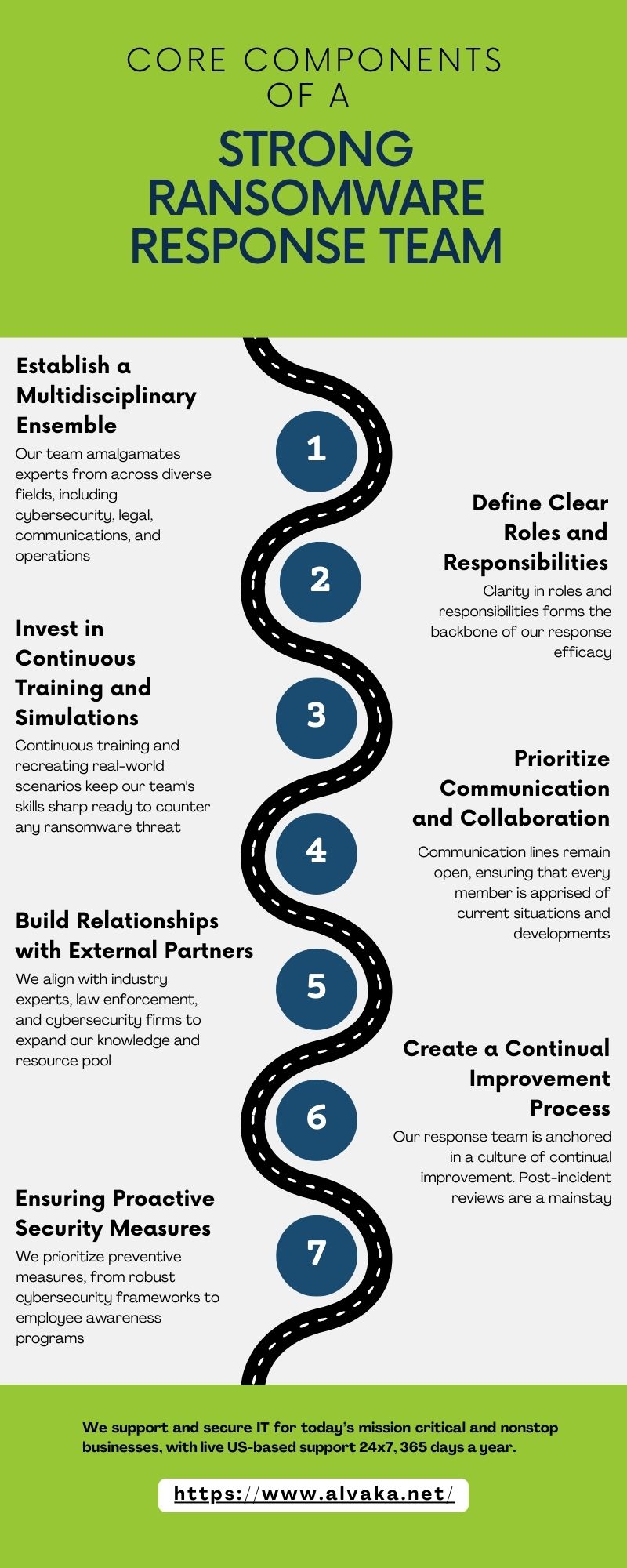
    Core Components of a Strong Ransomware Response Team

    1. Establishing a Multidisciplinary Ensemble

    In assembling an efficacious ransomware response team, we recognize the necessity of a multidisciplinary approach. Our team amalgamates experts from across diverse fields, including cybersecurity, legal, communications, and operations. We ensure that each member brings specialized knowledge to address the full spectrum of a ransomware crisis. Furthermore, this kind of squad is primed for rapid response, equipped to tackle threats from detection to resolution with precision and agility.

    2. Defining Clear Roles and Responsibilities

    Clarity in roles and responsibilities forms the backbone of our response efficacy. Upon induction, each member is acquainted with their specific duties. In the throes, IT professionals focus on containment and eradication of threats, legal experts concentrate on compliance and implications, while communications specialists manage stakeholder interactions. Consequently, when ransomware strikes, we are poised for a coordinated and efficient reaction.

    3. Investing in Continuous Training and Simulations

    To fortify our capabilities, we continually invest in training and simulation exercises. These initiatives keep our team’s skills sharp and ready to counter any ransomware threat. During these simulations, we recreate real-world scenarios, which helps us to identify potential weaknesses and enhance our strategies. Moreover, it nurtures a culture of resilience and perpetual readiness within our ranks.

    4. Prioritizing Communication and Collaboration

    Collaboration is the cornerstone of our ransomware response team’s success. Communication lines remain open, ensuring that every member is apprised of current situations and developments. Regular briefing sessions and joint decision-making frameworks foster a unified response. Given the propensity of ransomware to evolve, this ongoing partnership is indispensable to staying ahead of threats.

    • Collaborative assessment of the threat landscape
    • Development of a cohesive incident response plan
    • Frequent updates and adjustments in strategy according to emerging threats

    5. Building Relationships with External Partners

    How to Form an Effective Ransomware Response Team includes extending beyond our internal resources, as we build relationships with external partners. We align with industry experts, law enforcement, and cybersecurity firms to expand our knowledge and resource pool. This strategic alliance not only bolsters our response capability but also grants us access to cutting-edge intelligence and technologies.

    6. Creating a Continual Improvement Process

    Our response team is anchored in a culture of continual improvement. Post-incident reviews are a mainstay, allowing us to dissect our response and extract valuable lessons. Consequently, not only do we address lapses, but we also celebrate successes, always iterating on our processes to bolster our digital defenses.

    7. Ensuring Proactive Security Measures

    Proactivity is at the heart of our defense strategy. We prioritize preventive measures, from robust cybersecurity frameworks to employee awareness programs. Regularly updated defenses coupled with vigilant network monitoring serve as our bulwark against the tide of ransomware threats. Hence, our response team functions not solely as a reactive unit but as architects of a formidable digital fortress.

    Keys to Crafting a Skilled Ransomware Response Squad

    When contemplating the keys to crafting a skilled ransomware response team, remember that the strength of such a team lies in preparation, adaptability, and collaborative effort. At Alvaka, we encapsulate these ideals, forging a response team that not only confronts challenges but also anticipates them, ensuring that our clients’ digital assets are safeguarded with the highest regard for security and efficiency.

    Did you know? A robust Ransomware Response Team typically includes roles such as Incident Response Manager, Security Analysts, IT Staff, Legal Counsel, and PR specialists to manage the aftermath of an attack.

    Infographic of section "Core Components of a Strong Ransomware Response Team"

    Strengthening Your Shield Against Cyber Extortion

    Consolidating Our Strategy for Robust Ransomware Defense

    As we conclude our discourse on how to form an effective ransomware response team, it’s imperative to emphasize the significance of diligent preparation and swift action. Our collective experience and expertise at Alvaka are the keystones in supporting businesses to navigate the treacherous realm of cybersecurity threats. By assembling a skilled and dedicated ransomware response team, your organization will not only mitigate risks but also build a resilient digital fortress capable of withstanding the onslaught of cyber extortion.

    Envisioning a Future-Proof Cybersecurity Posture

    In foreseeing the future of cybersecurity, it’s clear that ransomware will continue to evolve and test the fortitude of our cyber defenses. Our proactive stance and readiness to adapt are what will differentiate our clients from those left vulnerable to these pervasive threats. With our guidance on how to form an effective ransomware response team, we commend companies for taking the indispensable step towards cybersecurity empowerment.

    At Alvaka, we envision a partnership that extends beyond the immediate crisis. We’re steadfast in providing continuous support and resources that contribute to the long-term protection and recovery capability of your systems. Embrace our expertise, and together, we’ll safeguard the integrity and continuity of your business operations.

    Commitment to Collaboration and Continuous Education

    Commitment to relentless collaboration and continuous education anchors the effectiveness of any ransomware response team. We understand the gravity of staying ahead of the curve, and with that knowledge, we nurture a culture of constant learning. Our team remains at the forefront of the latest threats and response strategies, ensuring that your defense mechanism never falls behind.

    Alvaka: Your Ally in Ransomware Recovery

    As you reinforce your cybersecurity battlefield, remember that Alvaka is your staunch ally in ransomware recovery. Our expert response team is equipped with the necessary tools and knowledge to swiftly neutralize threats and aid in the recovery process. By collaborating with us, you gain access to a wealth of cybersecurity insights and a team that is fully committed to your defense against digital extortion.

    Engage with Alvaka today and let us help you build an impregnable cyber shield. With our specialized services, from IT management to network services, we ensure that your journey on how to form an effective ransomware response team translates into a secure and prosperous digital future for your business.


    CISA Ransomware Response Checklist

    FAQ

    What are the primary threats posed by ransomware in today’s digital environment?

    In today’s digital environment, ransomware presents a significant threat by encrypting an organization’s data and demanding payment for its release. Recent attacks have led to substantial financial losses, operational disruptions, and reputational damage. Consequently, maintaining vigilance and implementing robust security measures is crucial for safeguarding digital assets.

    What impact have recent ransomware attacks had on businesses?

    Ransomware attacks have escalated, resulting in dire consequences for businesses, including downtime, financial strain due to ransom payments, data loss, and potential legal ramifications. Furthermore, businesses may suffer from diminished customer trust and disruptions to their supply chain, underscoring the need for an effective response team.

    Why is it essential to have a ransomware response team?

    Having a dedicated ransomware response team is essential because it ensures a structured and efficient approach to managing and mitigating ransomware incidents. This specialized team facilitates prompt action, minimizes damage, and aids in recovery, significantly contributing to the organization’s resilience against such cyber threats.

    Who should be included in a ransomware response team?

    A ransomware response team should include members with diverse skills and expertise, including IT security professionals, network engineers, legal advisors, communication specialists, and key decision-makers from within the organization. Additionally, external partners such as cyber insurance providers and law enforcement may play critical roles.

    How does a ransomware response team fit into overall IT management?

    A ransomware response team complements overall IT management by focusing specifically on the threat of ransomware. This team works in conjunction with other IT and network services to ensure a cohesive strategy for prevention, detection, response, and recovery from ransomware attacks. Essentially, it elevates the organization’s cybersecurity framework.

    What steps should we take to evaluate our current cybersecurity posture?

    To evaluate your cybersecurity posture, conduct a comprehensive risk assessment, review existing security policies and controls, and perform penetration testing. Additionally, ensuring employee awareness and training on cybersecurity best practices is a must for a well-rounded evaluation.

    What expertise should members of a ransomware response team possess?

    Members of a ransomware response team should possess expertise in cybersecurity, incident response, digital forensics, legal issues concerning data breaches, and crisis communication. Equally important is their ability to quickly make informed decisions during high-pressure situations to effectively counteract a ransomware incident.

    How should we prepare our team for a ransomware attack?

    To prepare your team for a ransomware attack, establish and regularly update an incident response plan, conduct frequent training exercises and simulations, and ensure continuous monitoring for ransomware threats. Moreover, maintain regular backups and implement robust access controls and network segmentation to limit the spread of an attack.

    Should we consider cyber insurance as part of our ransomware response planning?

    Absolutely. Cyber insurance should be considered an integral part of your ransomware response planning. It can provide financial assistance in the event of an attack, cover the costs related to response efforts, and offer access to valuable post-incident resources and support.

    How do we coordinate with external partners during a ransomware incident?

    During a ransomware incident, coordinate with external partners by establishing predefined communication channels and protocols. Ensure that roles and responsibilities are clearly defined, and external partners such as cybersecurity experts, legal counsel, and law enforcement are engaged early on to help manage the incident effectively.


    Alvaka is available 24×7 to assist you with any of your cybersecurity needs. Fill out the form on this page or call us at (949)428-5000!

  • Navigating Post-Ransomware Recovery: Essential Steps to Take

    Navigating Post-Ransomware Recovery: Essential Steps to Take

    Grappling with the Reality of Ransomware: An IT Emergency

    We understand the complexity and disruptiveness of a ransomware attack. It’s a scenario no one wants to face, yet it’s increasingly common in the digital age. Our first response is to acknowledge the gravity of the situation and the need for immediate action. Taking a calm and measured approach to post-ransomware recovery is crucial. Our team is prepared to step in and implement the necessary steps for a swift and secure restoration of operations.

    Assessing the Damage: Understanding the Impact on Your Network

    The heart of post-ransomware recovery lies in the assessment of the situation. This step is pivotal to grasp the scope of the attack and to evaluate its effect on your network. Our specialized team engages swiftly, employing sophisticated tools to uncover the breadth of the impact. Understanding which data has been affected, the infiltration points, and potential data exfiltration is critical for formulating an effective response. Our comprehensive assessment forms the foundation for all subsequent recovery steps.

    The Role of Professional IT Services in Post-Ransomware Scenarios

    In the aftermath of a ransomware attack, professional IT services become invaluable. As an experienced provider, we offer the expertise required to navigate through the complexities of recovery. Our team is well-versed in current cyber threat landscapes and possesses the technical skills necessary to address the situation head-on. We recognize that a swift response is crucial and our structured approach aims at restoring systems with minimal downtime and data loss.

    First Steps for Reclamation: Isolating Infected Systems and Communication

    The initial action in the recovery process is to isolate systems compromised by the ransomware. This preventative measure is crucial to curbing the spread of the malicious software and protecting the integrity of unaffected systems. Our team is adept at identifying and sequestering these systems quickly and efficiently. Communication during this phase is pivotal; we maintain transparency with stakeholders about the incident and its implications while ensuring confidentiality and regulatory compliance.

    Contingency Planning: Preparing for Post-Ransomware Operations

    We advocate for readiness, which is why our approach includes helping organizations establish and rehearse contingency plans. It’s our role to ensure that you are not only prepared to respond to a cyberattack but can also maintain critical operations during recovery. Through meticulous planning and coordination, our team aids in creating robust mechanisms that minimize operational impacts and facilitate a smoother transition back to full functionality.

    First Steps for Reclamation: Isolating Infected Systems and Communication

    Securing the Network Perimeter

    In the wake of a ransomware attack, our first priority is to secure your network’s perimeter. We methodically disconnect affected systems to contain the breach and prevent further encryption of data. By scrutinizing all points of entry, we ensure that attackers can no longer access the environment. This critical phase instills the foundation for a clean recovery process, bringing peace of mind that the threat is contained within a controlled structure.

    Initiating Strategic Communication

    Simultaneously, our team initiates a communication strategy that is vital for maintaining operational transparency. We believe in clear and concise communication channels with all stakeholders, keeping them informed of the situation and the steps being taken towards resolution. This fosters a collaborative atmosphere and manages expectations during the recovery journey.

    Assessing System Vulnerabilities

    Furthermore, we conduct a thorough assessment of system vulnerabilities. Our approach drills down to uncover how the ransomware infiltrated the system and identifies any other potential weaknesses that could be exploited. This evaluation is a cornerstone in fortifying the infrastructure and building resilience against future incidents.

    Critical Actions in the Immediate Aftermath

    • Evaluate the attack vector to understand the infection’s origin
    • Review all security systems and update them to the latest versions
    • Initiate a password reset throughout the organization
    • Deploy advanced monitoring tools to watch for suspicious activities
    • Create a detailed inventory of infected and unaffected assets

    By swiftly implementing these steps, we lay the groundwork for a secure pathway out of the chaos the ransomware has caused. Moreover, our approach is not just about recovery; it’s centered on strengthening your systems to ward off the evolving landscape of cyber threats.

    Did you know that one of the first steps in post-ransomware recovery is to isolate infected systems to prevent the spread of the attack? This containment is crucial for securing network integrity.

    Embarking on the Road to Recovery

    When the storm of a ransomware attack finally dissipates, the road to recovery may seem daunting, but with careful planning and precise action, businesses can navigate through the aftermath with confidence. Essential steps to take for post-ransomware recovery are not to be rushed, rather they should be part of a meticulously executed strategy. It’s crucial that we, at Alvaka, ensure that our networks are not just restored but bolstered against future attacks.

    Reflection and Analysis: Learning from the Ordeal

    Post-recovery provides a unique opportunity to reflect on the incident. Our team is committed to understanding how the breach occurred and implementing changes to safeguard against similar vulnerabilities. By analyzing the attack, we can fortify our defense mechanisms and inform our employees, clients, and stakeholders about improved measures taken to prevent future security lapses.

    Restoring Operations: A Stepwise Approach

    In the quest to return to normalcy, our methodical steps to take for post-ransomware recovery involve restoring operations from backups, prioritizing critical services, and ensuring continuity of business processes. We approach recovery with a stepwise restoration of services to minimize disruption and ensure the integrity of our revived systems. These cautionary measures are imperative to re-establishing a secure IT environment for our clients.

    Strengthening Defenses: Proactive Protection Measures

    At Alvaka, we recognize that the post-ransomware landscape demands a fortified approach to cybersecurity. As we navigate towards complete ransomware recovery, we employ advanced security solutions including real-time monitoring, endpoint protection, and routine audits. Our proactive stance on cybersecurity not only restores confidence in our network services but also positions us ahead of potential threats.

    Consolidating Our Commitment to Security and Service

    As we chart our course through the challenges of the post-ransomware period, we consolidate our dedication to providing unmatched IT management and network services. The key steps to take for post-ransomware recovery have been ingrained in our operational ethos, ensuring resilience against such adversity in the future. Our experience serves as a testament to our ability to not only recover but to emerge stronger and more secure, delivering the dependable services our clients rely on.

    Collaboration and Support: Partnering for a Safer Tomorrow

    Finally, through collaboration with stakeholders and continuous dialogue with cybersecurity experts, we create support structures that reinforce our network’s defenses. We believe in partnering with our clients and the wider IT community to build a more secure digital landscape. It’s the shared resolve and collective efforts that will ultimately shape a safer tomorrow for businesses navigating the digital sphere.

    Forging Ahead: Empowerment Through Strategic IT Management

    In conclusion, while ransomware attacks are a test of our resilience, they also provide an opportunity for growth and enhanced understanding of the complexities of cybersecurity. The aftermath is not just about recovery—it’s about empowerment through strategic IT management. At Alvaka, we are equipped to guide you through this process, ensuring that every measure taken not only restores what was lost but fortifies your systems against the unknown challenges ahead.

    FAQ

    What immediate steps should we take following a ransomware attack?

    First and foremost, we must act swiftly to isolate the affected systems to curtail the spread of the ransomware. Communicating with our IT management team is crucial to implement our emergency protocols effectively. Furthermore, prompt notification of stakeholders is essential to maintain transparency in our approach to the crisis.

    How can we assess the extent of damage caused by the ransomware?

    Assessing the damage involves a thorough investigation of our network by our IT services team. Additionally, we must perform a detailed audit of our systems to pinpoint where the ransomware took hold and which files were compromised. Our robust incident response plan includes state-of-the-art diagnostics to aid in this critical step.

    Should we pay the ransom demanded by the attackers?

    Deciding to pay the ransom is a complex issue and is not recommended. Paying the ransom does not guarantee the restoration of data and might encourage further attacks. Instead, we focus on our recovery plan and consult with law enforcement and cybersecurity professionals to explore all available options.

    Can we recover our data without paying the ransom?

    Thankfully, data recovery without paying the ransom is often possible, particularly when we have robust backup solutions in place. Our IT team works diligently to restore systems from backups and employs advanced recovery methods to retrieve as much data as we can from uncompromised backup sources.

    How do we prevent a future ransomware attack from occurring?

    Prevention is key, and thus we implement a multifaceted security approach that encompasses regular updates, employee training on cybersecurity best practices, rigorous access controls, and the continual enhancement of our cyber defenses. Moreover, we conduct periodic audits and simulations to reinforce our network’s resilience against future threats.

    What kind of support can professional IT management services offer post-ransomware?

    Professional IT management services bring specialized expertise in post-ransomware recovery, including damage assessment, system restoration, and securing our network against future threats. They offer structured recovery strategies and can provide vital support in managing the technical and logistical challenges of our response.

    How long does the recovery process usually take?

    The recovery timeframe can vary significantly depending on the magnitude of the attack and the complexity of our network. It’s a process that may take from a few days to several weeks. Throughout this period, our IT services team works relentlessly to expedite the recovery, and maintain operations with minimal disruption.

    What role do backups play in the recovery process?

    Backups are the cornerstone of our recovery efforts. They allow us to restore data and maintain business continuity. Consequently, it’s imperative to have a robust backup strategy in place, including regular intervals and secure offsite storage, as this will significantly expedite our ability to bounce back from such an incident.

    What communication policies should be in place during recovery?

    During recovery, maintaining clear and regular communication is essential. We establish communication policies that detail how and when to update stakeholders, clients, and employees. Additionally, we ensure that our communication is transparent to maintain trust and manage expectations about recovery timelines and potential impacts.

    How do we handle data that has been exposed or stolen?

    In case of data exposure, we follow legal requirements and industry standards for reporting the breach. This typically includes notifying affected individuals and possibly regulatory authorities. Further, we undertake an examination of the breach’s cause, and strengthen our security measures to protect against identical incidents occurring in the future.


    Alvaka is available 24×7 to assist you with any of your cybersecurity needs. Fill out the form on this page or call us at (949)428-5000!