
Blog

  • Top Ransomware Recovery Services for Businesses: A Strategic Guide

    Top Ransomware Recovery Services for Businesses: A Strategic Guide

    Understanding the Threat: Ransomware and Its Impact on Businesses

    Top Ransomware Recovery Services for Businesses have become essential as ransomware emerges as an insidious threat that locks away critical data, demanding payment for its release. This sophisticated malware variant can cripple operations, no matter the size of the business. In recent years, there’s been a noticeable escalation in ransomware incidents, with attackers becoming more brazen, targeting everything from small enterprises to major corporations and even critical infrastructure. According to a report from Cybersecurity Ventures, ransomware damages are predicted to cost victims worldwide upwards of $20 billion by 2021, a 57-fold increase in just five years, illustrating the urgency for robust defense and recovery strategies.

    The Crucial Role of Ransomware Recovery Services

    As we delve deeper into the digital era, ransomware recovery plans have become a cornerstone of business resilience. These services shoulder the critical function of helping businesses restore operations swiftly and securely following an attack. The role of ransomware recovery is not just about damage control but also about instilling confidence that an organization can withstand such threats with minimal disruption. We understand that when faced with ransomware, the clock is ticking; downtime translates to lost revenue, damaged credibility, and, potentially, legal repercussions. That’s why our approach prioritizes rapid response to ensure that the toll on your business is kept to the bare minimum.

    Minimizing Downtime and Financial Loss

    In an event where data is held hostage, the immediate priority is to resume normal operations without capitulating to extortion. Ransomware recovery services not only aid in the retrieval of compromised data but also work to immunize the network against future breaches. At Alvaka, our adaptive recovery solutions are designed to get your business back on its feet with speed and precision, mitigating financial losses and reducing the downtime that can erode client trust and company reputation.

    Selecting Top Ransomware Recovery Services for Businesses

    When it comes to choosing a ransomware recovery service, businesses must weigh several key factors. We advise looking for providers with a proven track record in swiftly navigating the complexities of ransomware remediation. The expertise and adaptability of the recovery service are pivotal in ensuring a swift and comprehensive recovery process. Additionally, proactive monitoring and defense mechanisms are critical features of top-tier recovery services, aiding in the prevention of future attacks.

    Expert Solutions and Benefits of Ransomware Recovery

    Engaging with top ransomware recovery services ensures access to a team of experts dedicated to fortifying your data against cyber threats. With the evolution of ransomware tactics, it is vital that recovery services remain ahead of the curve, tailoring their approach to both anticipate and react to the evolving landscape. Our commitment at Alvaka is to extend beyond recovery; we focus on resilience. By aligning with a service that offers comprehensive solutions, you can safeguard your business assets and ensure continuity in the face of digital adversity.

    Core Features of Top Ransomware Recovery Services

    In understanding the full scope of defense against ransomware threats, we at Alvaka prioritize offering comprehensive ransomware recovery services tailored for businesses seeking robust protection and rapid response. Here, we detail the stand-out features and premises upon which we structure our services, ensuring that your organization can swiftly bounce back in the face of cybersecurity incidents.

    Proactive Threat Monitoring and Detection

    Continuous vigilance is the cornerstone of robust ransomware defense. We implement cutting-edge monitoring technologies to identify suspicious activities and potential threats before they escalate into full-blown attacks. Our commitment to staying ahead of cybercriminals means that our clients can rely on mitigating risks before they impact operations.

    Immediate Response and Containment

    Once a threat is detected, immediate action is pivotal. Our top ransomware recovery services deploy incident response protocols that swiftly isolate affected systems, halting the spread of ransomware. By containing threats rapidly, we minimize potential damage and lay the groundwork for a speedy recovery process, ensuring that your business can continue with minimal interruption.

    Advanced Decryption Tools

    In scenarios where data has been encrypted by ransomware, regaining access is crucial. Employing state-of-the-art decryption tools, we work diligently to unlock your data, utilizing our expertise to counteract the encryption mechanisms ransomware may have placed on your files.

    Data Recovery and System Restoration

    Recovery is not just about retrieving data; it’s about restoring your systems to operational states. We ensure that your critical business data is not only recovered but also that your digital infrastructure is restored to its pre-attack status. This holistic approach is central to what makes us stand out among top ransomware recovery services for businesses.

    User Education and Training

    While technology plays a significant role in ransomware defense, empowering your staff with knowledge is just as important. We provide comprehensive training programs for your staff, enhancing their ability to recognize and respond to ransomware threats, thereby reinforcing our technical safeguards with a well-informed team.

    Customized Recovery Planning

    Every business is unique, and so is the ransomware recovery plan that we’ll devise for you. We tailor recovery solutions to fit your particular needs, taking into account your business size, industry, and specific system configurations. Customized planning ensures that recovery efforts are streamlined and effective, with no resource wasted.

    Regular Data Backups

    Maintaining frequent and secure backups of your critical data is a decisive step in ransomware preparation and recovery. Our managed services include regular backup scheduling, testing, and storage in secure locations, providing a resilient framework for data integrity and swift restoration capabilities.

    • 24/7 support and assistance
    • Comprehensive threat assessments
    • Recovery exercises and drills
    • Post-recovery analysis for continuous improvement

    Understanding that downtime can be incredibly costly, we aim to expedite the recovery process through these meticulous preparations and responses. Opting for top ransomware recovery services translates into more than just a one-time fix; it signifies an ongoing commitment to secure, resilient business operations.

    Did you know? Top ransomware recovery services often include real-time monitoring, rapid incident response, and data restoration capabilities to minimize damage and downtime for businesses.

    Securing Your Future: The Alvaka Advantage in Ransomware Defense

    Why Partner with Us for Top Ransomware Recovery Services for Businesses?

    As the digital landscape evolves, so does the sophistication of cyber threats. It’s paramount for businesses to have robust defenses against these dangers. At Alvaka, we understand that securing your organization against ransomware is not just about immediate recovery; it’s about laying the groundwork for a resilient future. Our comprehensive approach to ransomware recovery equips businesses with the necessary tools and strategies to not only bounce back from attacks but also to fortify their defenses to prevent future incidents.

    Commitment to Excellence in Ransomware Recovery and Prevention

    At Alvaka, we don’t just offer services; we deliver peace of mind. Our commitment to excellence in providing top ransomware recovery services for businesses is unwavering. With our team of experts, we ensure a rapid response to ransomware incidents, minimizing downtime and safeguarding your company’s reputation. Our vigilance in monitoring and staying ahead of ransomware threats translates into robust protection for our clients. By choosing Alvaka, you’re not just selecting a service provider; you’re appointing a guardian for your digital assets.

    Looking Beyond Recovery: Strengthening Your Cybersecurity Posture

    Alvaka’s vision of ransomware defense encompasses more than just recovery; it includes a continuous cycle of assessment, improvement, and education. We empower businesses to enhance their cybersecurity posture with the best practices and cutting-edge solutions tailored to their unique needs. Our proactive approach in collaborating with clients ensures they’re equipped to navigate the evolving threat landscape confidently. Rest assured, partnering with Alvaka means fortifying your business with premier ransomware defense capabilities.

    Partner with Alvaka for Superior Ransomware Recovery Solutions

    Ransomware attacks require a swift and sophisticated response, a forte at the core of our mission here at Alvaka. Our team not only restores operations promptly but also provides ongoing support to make your business more resilient against future threats.

    We invite you to experience the Alvaka difference by entrusting us with your cybersecurity needs. Ransomware recovery is just the beginning of a long-term partnership aimed at safeguarding your business’s future. With Alvaka, you gain more than top ransomware recovery services for businesses; you gain a steadfast ally in the battle against cybercrime.

    FAQ

    What is ransomware, and why is it a significant threat to businesses?

    Ransomware is a malicious software that encrypts a victim’s files, making them inaccessible until a ransom is paid to the attackers. It poses a significant threat to businesses of all sizes because it can lead to critical data loss, operational downtime, and substantial financial costs. Furthermore, it often leads to a breach of sensitive information, damaging a company’s reputation and customer trust.

    How have ransomware attacks impacted businesses recently?

    Recent statistics indicate a surge in ransomware attacks, causing severe consequences for businesses, including operational disruption, loss of revenue, and potential legal liabilities. Additionally, the average cost of a ransomware breach has skyrocketed, emphasizing the need for robust protection and recovery strategies to safeguard business continuity.

    Why is a ransomware recovery strategy essential for businesses?

    A dedicated ransomware recovery strategy is crucial because it ensures that a business can swiftly restore operations after an attack. Such a strategy minimizes downtime and financial loss by having predefined procedures to follow, making the overall recovery process more efficient and cost-effective.

    What role do ransomware recovery services play in business continuity?

    Ransomware recovery services play a pivotal role in business continuity by providing specialized expertise and solutions to quickly recover encrypted data and resume normal operations. Consequently, these services significantly reduce the recovery time and related costs following a ransomware incident.

    What should businesses look for when selecting a ransomware recovery service?

    Businesses should look for ransomware recovery services with a proven track record, expertise in the latest cybersecurity technologies, and a comprehensive suite of recovery solutions. Importantly, they should also assess the service’s response time, the scalability of their solutions, and their capacity to provide tailored support tailored to the business’s specific needs.

    How can a top-tier ransomware recovery service benefit a business?

    A top-tier ransomware recovery service can provide businesses with rapid response capabilities, minimizing downtime and mitigating financial losses. Moreover, these services usually offer proactive monitoring and threat intelligence, which can help prevent future attacks and strengthen the business’s overall cybersecurity posture.

    What are the key features of top ransomware recovery services?

    Top ransomware recovery services typically offer features such as immediate incident response, secure data backups, forensic analysis, and assistance with data restoration. Additionally, they provide ongoing support and guidance on best practices for preventing future ransomware incidents.

    Can ransomware recovery services help prevent ransomware attacks?

    Yes, leading ransomware recovery services often include preventative measures such as risk assessments, employee training programs, and the implementation of advanced security protocols to reduce the likelihood of a successful ransomware attack.

    Is paying the ransom recommended when dealing with a ransomware attack?

    As a company specializing in ransomware recovery, we advise against paying a ransom. Paying does not guarantee the return of data and may further incentivize the attackers. Instead, we recommend engaging with our recovery services to safely restore operations without giving in to the demands of cybercriminals.

    How quickly can businesses expect to recover from a ransomware attack with professional services?

    The recovery time from a ransomware attack can vary, but with professional services, businesses can typically expect a much faster recovery than attempting to resolve the issue on their own. Having experts who can promptly assess the situation and execute a recovery plan is essential for minimizing downtime and its associated costs.


    Alvaka is available 24×7 to assist you with any of your cybersecurity needs. Fill out the form on this page or call us at (949)428-5000!

  • The Rising Cost of Ransomware on Critical Infrastructure: A 2024 Perspective

    The Rising Cost of Ransomware on Critical Infrastructure: A 2024 Perspective

    Ransomware attacks have become a formidable threat to critical national infrastructure (CNI), inflicting significant financial and operational damage on essential services. As these attacks grow in sophistication, the repercussions for sectors such as energy, water, healthcare, and telecommunications are becoming increasingly severe.

    Escalating Ransom Payments

    Recent statistics reveal a dramatic surge in ransom payments by CNI organizations. According to Sophos, the median ransom payment in 2024 soared to $2.54 million, a staggering 41-fold increase from the previous year’s $62,500. The mean payment was even higher, at $3.225 million, highlighting the financial burden these attacks impose on victims. Interestingly, sectors like IT, tech, and telecoms had lower average payments at $330,000, whereas lower education and federal government organizations faced the highest average payments at $6.6 million.

    Soaring Recovery Costs

    The costs associated with recovering from ransomware attacks have also risen sharply. Some CNI sectors have seen recovery costs quadruple, reaching a median average of $3 million per incident. While the mean recovery cost for the oil, gas, energy, and utilities sectors slightly decreased from $3.17 million to $3.12 million, the energy and water sectors experienced the most significant increases, with new averages four times greater than the global median of $750,000.

    Longer Recovery Times

    The increased complexity of ransomware attacks is resulting in longer recovery times. The proportion of energy and water sector organizations able to recover within a week dropped from 41% the previous year to just 20%. Moreover, the number of victims requiring more than a month to recover rose to 55% from 36%. This trend underscores the growing sophistication of ransomware campaigns and the extensive efforts required for full remediation.

    Counterproductive Ransom Payments

    Despite the high costs, paying ransoms does not necessarily expedite recovery. Sophos reports that 61% of CNI organizations paid ransoms as part of their recovery efforts, yet this did not result in shorter recovery times. In fact, paying ransoms may encourage further attacks and does not guarantee data restoration, making it a risky strategy.

    Legislative and Regulatory Responses

    In response to the escalating threat, governments are introducing new legislation to improve cybersecurity and resilience in critical sectors. In the U.S., the Cybersecurity and Infrastructure Security Agency (CISA) has introduced initiatives such as CIRCIA, which mandates the disclosure of ransomware attacks by CNI operators. Similarly, the UK’s upcoming Cyber Security and Resilience Bill aims to enhance the cybersecurity posture of critical sectors and the wider supply chain.

    Addressing Vulnerabilities

    Exploited vulnerabilities continue to be the primary cause of ransomware attacks on CNI, accounting for 49% of incidents in 2024, up from 35% the previous year. Strengthening cybersecurity measures and addressing these vulnerabilities is crucial to mitigating the impact of ransomware.

    The increasing financial and operational costs of ransomware attacks on critical infrastructure highlight the urgent need for enhanced cybersecurity measures. Organizations must focus on preventing attacks by addressing vulnerabilities, improving recovery strategies, and reconsidering the efficacy of paying ransoms. As the threat landscape evolves, robust legislative and regulatory frameworks will play a vital role in protecting essential services and ensuring national security.

    For more detailed statistics and trends on ransomware, refer to reports by Cloudwards and The Record.

    Read more about Critical Infrastructure at Risk due to Ransomware.


    Alvaka is available 24×7 to assist you with any of your cybersecurity needs. Fill out the form on this page or call us at (949)428-5000!
  • Unmasking the True Motives Behind Ransomware: The Case of Bronze Starlight

    Unmasking the True Motives Behind Ransomware: The Case of Bronze Starlight

    Ransomware attacks have surged in recent years, causing significant financial and operational damage to organizations worldwide. However, not all ransomware campaigns are driven purely by financial gain. The case of the Chinese-based threat actor known as Bronze Starlight, or DEV-0401, reveals a more insidious use of ransomware—as a smokescreen for cyber espionage.

    The Emergence of Bronze Starlight

    Bronze Starlight, active since early 2021, has gained notoriety for its sophisticated cyber attacks. Leveraging a custom DLL loader called HUI Loader, the group deploys Cobalt Strike and PlugX payloads to establish command and control over targeted systems. Over the past year, Bronze Starlight has utilized five ransomware families—LockFile, AtomSilo, Rook, Night Sky, and Pandora—and has exposed 21 victims on name-and-shame leak sites as of mid-April.

    Ransomware as a Smokescreen

    While ransomware typically aims to extort money from victims, Bronze Starlight’s campaigns appear to have a different end goal. According to cybersecurity researchers, the group uses ransomware to conceal its true objective: stealing intellectual property. This tactic serves to distract incident responders, focusing their efforts on recovery rather than investigating the underlying espionage activities.

    Targeted Industries and Geographic Focus

    Bronze Starlight’s victimology offers clues to its espionage motives. Researchers estimate that 75% of the known victims would be of interest to Chinese government-sponsored groups. The targets span various industries and geographic locations, including:

    • Pharmaceutical companies in Brazil and the U.S.
    • Electronic component designers and manufacturers in Lithuania and Japan
    • U.S. law firms
    • U.S.-based media organizations with offices in China and Hong Kong

    Short-Lived Ransomware Campaigns

    Unlike conventional financially motivated ransomware operations, Bronze Starlight’s ransomware families have brief lifespans. Each family targets a small number of victims over a short period before ceasing operations. This pattern, combined with the group’s focus on exploiting known vulnerabilities in network perimeter devices, underscores the strategic and selective nature of their attacks.

    Code Overlap and Unique Strains

    Bronze Starlight has developed distinct ransomware strains. LockFile and AtomSilo share a codebase, while Rook, Night Sky, and Pandora are based on the Babuk ransomware source code, leaked in September 2021. These ransomware families are unique to Bronze Starlight and exhibit significant similarities in their campaigns, including the use of the HUI loader to deploy Cobalt Strike beacons.

    Collaboration Among Chinese-Based Threat Actors

    Evidence suggests that Bronze Starlight collaborates with other Chinese-based threat actors. For instance, in a January incident response, researchers observed Bronze University, another Chinese threat group, active on the same network as Bronze Starlight. This collaboration points to a broader strategy of resource and information sharing among Chinese espionage attackers, further blurring the lines between financially motivated and state-sponsored cyber activities.

    Implications for Cybersecurity

    The operations of Bronze Starlight highlight the evolving complexity of ransomware attacks. Organizations must recognize that ransomware can serve multiple purposes beyond extortion, including acting as a cover for espionage. To mitigate such threats, businesses should:

    Bronze Starlight’s use of ransomware as a smokescreen for espionage underscores the multifaceted nature of modern cyber threats. By understanding the broader motives behind these attacks, we can better protect our organizations from both financial and intellectual property losses.


    Alvaka is available 24×7 to assist you with any of your cybersecurity needs. Fill out the form on this page or call us at (949)428-5000!

  • FBI Recovers 7,000 LockBit Decryption Keys

    FBI Recovers 7,000 LockBit Decryption Keys

    In a significant victory against cybercrime, the FBI has announced the recovery of over 7,000 decryption keys for LockBit ransomware, one of the most formidable ransomware variants in recent years. This development offers a ray of hope for victims worldwide, who can now reclaim their encrypted data for free.

    The LockBit Ransomware Threat

    Since June 2022, LockBit has been responsible for 7,000 attacks, raking in up to $1 billion in ransom payments from victims globally.

    Key Characteristics of LockBit

    • High-Speed Encryption: LockBit is known for its rapid encryption capabilities, making it particularly devastating.
    • Double Extortion Tactics: In addition to encrypting data, LockBit operators often threaten to release sensitive information unless a ransom is paid.
    • Wide Reach: The ransomware has targeted a diverse range of sectors, including healthcare, finance, and retail.

    Operation Cronos: A Landmark Disruption

    In February 2024, the FBI, in collaboration with international partners, launched Operation Cronos. This operation aimed to dismantle LockBit’s infrastructure and bring those responsible to justice. Key outcomes of the operation included:

    • Seizure of 34 Servers: These servers contained critical data, including over 2,500 decryption keys.
    • Access to Data Leak Site: The FBI gained control over LockBit’s data leak site, exposing sensitive information on nearly 200 affiliates.
    • Temporary Shutdown: The operation temporarily disrupted LockBit’s activities, providing a respite to potential victims.

    Uncovered Information and Arrests

    While Operation Cronos did not result in immediate arrests, it built on previous law enforcement successes. Notable arrests related to LockBit include:

    • Mikhail Vasiliev: Arrested in November 2022.
    • Mikhail Pavlovich Matveev (aka Wazawaka): Apprehended in May 2023.
    • Ruslan Magomedovich Astamirov: Captured in June 2023.
    • Artur Sungatov and Ivan Gennadievich Kondratiev (aka Bassterlord): Detained in February 2024.

    The U.S. Government is also offering a $10 million reward for information leading to the arrest of LockBit’s main operators, demonstrating a continued commitment to dismantling this cybercriminal network.

    In light of the recovered decryption keys, the FBI is urging all past victims of LockBit ransomware to come forward. Victims can visit the Internet Crime Complaint Center (ic3.gov) to seek assistance in recovering their encrypted data. This initiative aims to help businesses and individuals restore their operations without succumbing to ransom demands.

    Steps for Victims:

    1. Visit ic3.gov: Report your incident and provide necessary details.
    2. Verify Your Status: Confirm whether your data was encrypted by LockBit.
    3. Utilize Decryption Keys: If applicable, use the recovered keys to unlock your data.

    Importance of Cybersecurity Measures

    While the recovery of decryption keys is a major victory, it underscores the ongoing need for robust cybersecurity measures. Organizations must remain proactive in their defense strategies to mitigate the risk of ransomware attacks.

    Key Cybersecurity Practices:

    • Regular Backups: Maintain regular, secure backups of critical data.
    • Employee Training: Educate employees on recognizing phishing attempts and other common attack vectors.
    • Advanced Security Solutions: Implement advanced security tools such as firewalls, antivirus software, and intrusion detection systems.
    • Incident Response Plan: Develop and regularly update an incident response plan to quickly address potential breaches.

    The FBI’s recovery of over 7,000 LockBit decryption keys marks a pivotal moment in the fight against ransomware. This achievement not only aids past victims but also sends a strong message to cybercriminals.


    Alvaka is available 24×7 to assist you with any of your cybersecurity needs. Fill out the form on this page or call us at (949)428-5000!

  • How Do We Navigate the Surge in Ransomware with Essential Cybersecurity Strategies for 2024?

    How Do We Navigate the Surge in Ransomware with Essential Cybersecurity Strategies for 2024?

    In the ever-evolving landscape of cyber threats, ransomware continues to pose a significant challenge for organizations worldwide. Sophos’ “The State of Ransomware 2024” report highlights a staggering 500% increase in average ransom payments over the past year, signaling a more aggressive approach by cybercriminals. This blog explores the latest trends and offers crucial cybersecurity strategies to protect against ransomware attacks.

    1. Understanding the Current Ransomware Landscape

    According to recent data, the average ransom payment has escalated to $2 million per incident, a fivefold increase from the previous year. Despite a decrease in the frequency of attacks, the financial stakes have never been higher. With 63% of ransom demands now exceeding $1 million, and a third demanding over $5 million, it’s clear that ransomware operators are targeting richer payoffs from their victims.

    2. The Decrease in Attack Frequency

    Interestingly, while the ransom amounts have surged, the rate of organizations hit by ransomware dropped from 66% to 59%. This could indicate that ransomware gangs are opting for a ‘quality over quantity’ approach, targeting more lucrative or vulnerable entities rather than casting a wider net.

    3. Funding Ransom Payments

    The Sophos report sheds light on how affected organizations are managing the financial burden of ransom demands. Notably, 40% of ransom payments are funded directly by the victim organizations, with significant contributions from insurance providers, who are involved in 83% of cases, underlining the critical role of cyber insurance in response strategies.

    4. The Challenge of Securing Backups

    A concerning trend is the successful targeting of backups by cybercriminals, with 57% of such attempts succeeding last year. The compromise of backups can significantly hinder recovery efforts, doubling the average ransom demand faced by affected organizations.

    5. Key Attack Vectors

    Exploited vulnerabilities remain the most common entry point for ransomware, followed by compromised credentials, malicious emails, and phishing attacks. Organizations must prioritize patch management, employ robust authentication processes, and educate employees about the dangers of phishing.

    6. Cybersecurity Strategies for 2024

    To combat the growing threat of ransomware, organizations should:

    • Implement comprehensive vulnerability management programs to quickly address known security gaps
    • Enhance email security protocols to filter out potential ransomware triggers
    • Educate and train employees regularly on cybersecurity best practices
    • Invest in cyber insurance to mitigate financial risks associated with ransomware attacks
    • Develop and regularly test robust backup strategies that include off-site and encrypted backups

    Five cybersecurity strategies infographic

    The rise in ransomware threats demands a proactive and informed approach to cybersecurity. By understanding the trends outlined in the latest Sophos report and implementing strategic defenses, organizations can better protect themselves against the costly consequences of ransomware attacks.

    Stay ahead of cyber threats with our expert cybersecurity services. Contact us today to learn how we can help safeguard your organization from ransomware and other digital dangers.


    Alvaka is available 24×7 to assist you with any of your cybersecurity needs. Fill out the form on this page or call us at (949)428-5000!

  • How is the Landscape of Cybersecurity and Ransomware Threats Evolving?

    How is the Landscape of Cybersecurity and Ransomware Threats Evolving?

    Cybersecurity remains a paramount concern for individuals and organizations alike. Among the various threats, ransomware has emerged as one of the most significant challenges, causing widespread disruption and financial loss. It is important to get educated on the current trends and landscape of cybersecurity, the rise of ransomware, and the proactive measures you can take to safeguard your digital assets.

    The Rise of Ransomware: A Growing Threat

    Ransomware attacks have surged in recent years, targeting businesses of all sizes and sectors. These malicious attacks encrypt valuable data, demanding a ransom for its release. High-profile incidents, such as the Colonial Pipeline attack, have underscored the severe impact ransomware can have on critical infrastructure and business operations.

    According to recent reports, ransomware attacks increased by 150% in 2023, with cybercriminals employing more sophisticated techniques. Notable ransomware variants like DragonForce and LockBit 3.0 have been at the forefront of these attacks, leveraging advanced encryption methods and evasion tactics to bypass traditional security measures.

    Lloyd’s of London’s Updated Cyber War Wordings

    Recognizing the systemic risks posed by state-backed cyber-attacks, Lloyd’s of London has issued updated guidance on cyber war wordings. This initiative aims to prevent disputes over policy coverage and ensure clearer guidelines for cyber-attack policies.

    Key updates include:

    • Mandatory Exclusions: All standalone cyber-attack policies must exclude liability for losses arising from state-backed cyber-attacks unless specifically agreed by Lloyd’s.
    • Clause Adoption Attestations: Managing agents are required to complete clause adoption attestations twice a year, starting from Q2 2024. This applies to both insurance and reinsurance syndicates.
    • Advanced Syndicates: From April 1, 2024, only syndicates approved as “Advanced” may use type 4 clauses, with limitations on renewal business and aggregate limits. By January 1, 2025, type 4 clauses will be prohibited for both new and renewal policies.

    Proactive Measures Against Ransomware

    To combat the growing threat of ransomware, organizations must adopt a multi-layered approach to cybersecurity. Here are some essential measures:

    1. Regular Backups: Ensure that all critical data is regularly backed up and stored in a secure, offsite location. This can mitigate the impact of a ransomware attack by allowing data restoration without paying a ransom.
    2. Advanced Threat Detection: Utilize advanced threat detection systems that can identify and neutralize ransomware before it encrypts your data. Machine learning and AI-based solutions can offer enhanced protection.
    3. Employee Training: Educate employees about the dangers of phishing and other common attack vectors. Regular training sessions can help reduce the risk of accidental clicks on malicious links.
    4. Patch Management: Keep all software and systems updated with the latest security patches. This reduces vulnerabilities that ransomware can exploit.
    5. Incident Response Plan: Develop and regularly update an incident response plan. This ensures that your organization can quickly and effectively respond to a ransomware attack, minimizing downtime and damage.

    Proactive Measures Against Ransomware Infographic

    The cybersecurity world is constantly evolving, with ransomware posing a significant and growing threat. By staying informed about the latest developments, such as Lloyd’s updated cyber war wordings, and implementing robust security measures, organizations can better protect themselves against these malicious attacks.

    Remember, proactive defense is key to safeguarding your digital assets and ensuring the continuity of your operations in the face of cyber threats.


    Alvaka is available 24×7 to assist you with any of your cybersecurity needs. Fill out the form on this page or call us at (949)428-5000!

  • How Can We Elevate Cybersecurity and Combat Ransomware Using Advanced Threat Detection Techniques?

    How Can We Elevate Cybersecurity and Combat Ransomware Using Advanced Threat Detection Techniques?

    As cyber threats evolve, so does the sophistication of ransomware attacks, posing severe challenges to organizations worldwide. The recent revelation by Securonix about the FROZEN#SHADOW campaign highlights the urgent need for advanced cybersecurity measures. Below, we will delve into the complexities of ransomware threats and discuss state-of-the-art techniques to combat them effectively, specifically advanced threat detection.

    1. Understanding the Threat Landscape

    The FROZEN#SHADOW campaign is a stark reminder of the dynamic nature of cyber threats. Cybersecurity researchers have unearthed this ongoing attack leveraging phishing emails to deliver a malware known as SSLoad, which subsequently deploys Cobalt Strike and ConnectWise ScreenConnect to take over systems completely. This method underscores the attackers’ shift towards more covert and sophisticated techniques, making traditional defense mechanisms less effective.

    2. The Mechanics of SSLoad

    SSLoad, a particularly stealthy malware, infiltrates systems to gather and transmit sensitive information while deploying multiple backdoors to maintain persistence and avoid detection. This malware initiates its infection through seemingly benign emails, showcasing the critical need for enhanced email security protocols and employee awareness training.

    3. Advanced Threat Detection Techniques

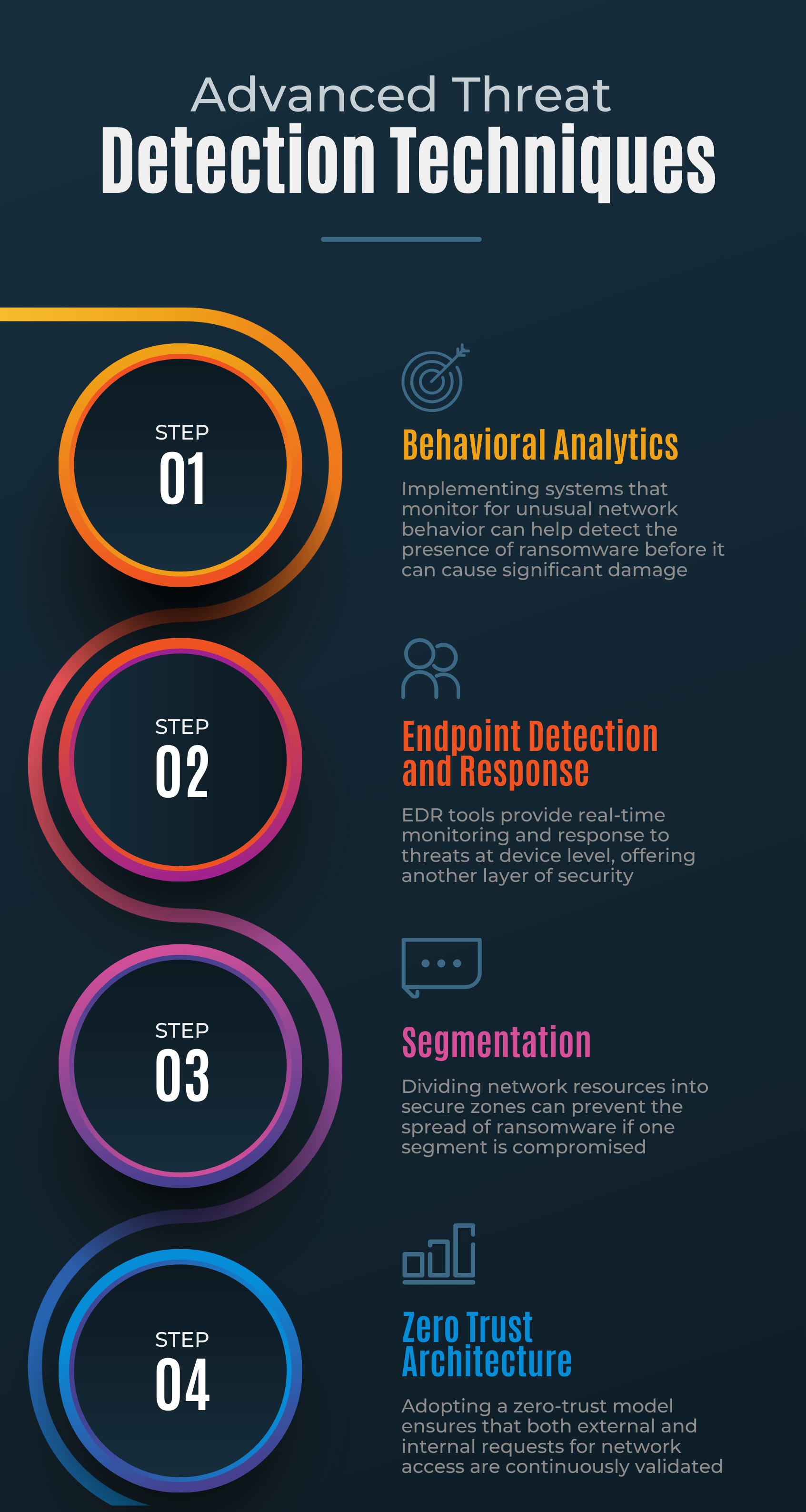
    In response to the evolving ransomware tactics, organizations must adopt advanced threat detection techniques:

    Behavioral Analytics

    • Implement systems that monitor for unusual network behavior. This can help detect the presence of ransomware before it causes any significant damage

    Endpoint Detection and Response

    • EDR tools provide real-time monitoring and response to threats at device level, offering another layer of security

    Segmentation

    • Dividing network resources into secure zones can help prevent the spread of ransomware if one segment is compromised

    Zero Trust Architecture

    • Adopting a zero-trust model ensures that both external and internal requests for network access are continuously validated

    Advanced Threat Detection Techniques

    4. Importance of Regular Training and Updates

    Training employees to recognize phishing attempts and malicious emails is more crucial than ever. Regular updates and patches also minimize vulnerabilities that can be exploited by ransomware, ensuring systems are safeguarded against known threats.

    5. Planning for Incident Response

    Having a robust incident response plan can significantly reduce the impact of a ransomware attack. This plan should include immediate isolation of infected systems, communication strategies, and recovery procedures to restore data from secure backups.

    Ransomware remains one of the most significant threats to global cybersecurity, requiring a sophisticated and proactive approach to defense. By understanding the latest attack methods and implementing advanced detection techniques, organizations can better protect themselves against these disruptive threats.

    Protect your organization from the ever-present threat of ransomware. Contact our cybersecurity experts today to fortify your defenses and ensure your data remains secure.


    Alvaka is available 24×7 to assist you with any of your cybersecurity needs. Fill out the form on this page or call us at (949)428-5000!

  • DragonForce and LockBit 3.0: Emerging Threats in Cybersecurity

    DragonForce and LockBit 3.0: Emerging Threats in Cybersecurity

    The cybersecurity landscape is continuously evolving, with new threats emerging that challenge the preparedness of organizations worldwide. Recently, the spotlight has turned to two particularly menacing ransomware strains: DragonForce Ransomware and LockBit 3.0. These threats not only highlight the persistent danger of cyberattacks but also underscore the implications of leaked cyber tools in the hands of malicious actors.

    Unpacking the Threats: DragonForce and LockBit 3.0

    LockBit 3.0, also known as LockBit Black, is the third iteration of a notorious ransomware family. Developed by the LockBit group, it was infamously leaked in September 2022 by a disgruntled developer. This leak has enabled various cybercriminal factions, including the newly emerged DragonForce ransomware group, to harness its capabilities to launch sophisticated attacks.

    DragonForce ransomware, first detected in November 2023, has been utilizing the leaked LockBit 3.0 builder to craft its ransomware, leading to a series of high-profile attacks. Employing a double extortion tactic, this group exfiltrates data before encrypting it, coercing victims into paying the ransom by threatening to publish their sensitive data.

    The Leaked Builder’s Impact

    The accessibility of ransomware-building tools like the one from LockBit 3.0 has significantly lowered the barrier to entry for cybercriminals. These tools enable even less technically skilled individuals to launch ransomware attacks, which increases the overall volume and sophistication of threats that organizations must fend off. This scenario is exemplified by DragonForce’s rapid establishment as a formidable player in the ransomware arena.

    High-Profile Attacks

    DragonForce has claimed responsibility for attacks on entities such as the Ohio Lottery, Yakult Australia, and Coca-Cola Singapore. Such high-profile targets underscore the ransomware’s capabilities and the serious threat it poses to both private and public sectors. Moreover, the group’s claim of compromising the government of Palau’s IT systems, although denied, adds to its intimidating reputation.

    Mitigation Strategies

    To defend against these emerging ransomware threats, organizations must adopt comprehensive cybersecurity measures:

    • Regular Updates and Patch Management: Keeping systems up to date to patch vulnerabilities that could be exploited by ransomware.
    • Advanced Threat Detection Systems: Employing tools that can detect and neutralize threats before they execute.
    • Employee Training: Educating staff on recognizing phishing attempts and other common tactics used by cyber attackers.
    • Robust Data Backups: Maintaining frequent and secure backups of important data to prevent loss in the event of an attack.

    Strengthening Cyber Defenses

    The emergence of DragonForce using the leaked LockBit 3.0 builder is a stark reminder of the dynamic and dangerous nature of the cybersecurity threatscape. As these threats grow more sophisticated, so too must the strategies to combat them. It is imperative for organizations to remain vigilant, proactive, and equipped with advanced cybersecurity measures to protect against these ever-evolving ransomware attacks.

    For organizations looking to safeguard their infrastructure, it is crucial to stay ahead of the curve by investing in cutting-edge cybersecurity defenses and fostering a culture of security awareness throughout the organization.


    Alvaka is available 24×7 to assist you with any of your cybersecurity needs. Fill out the form on this page or call us at (949)428-5000!

  • DragonForce Ransomware Recovery Services

    DragonForce Ransomware Recovery Services


    DragonForce has grown into a prominent affiliate-driven ransomware and extortion threat. Recent reporting describes DragonForce as a rapidly evolving ransomware-as-a-service operation with cartel-like affiliate models, data theft pressure, and increasingly sophisticated intrusion tradecraft.

    DragonForce Ransomware: 2026 Threat Update

    DragonForce first appeared in the modern ransomware ecosystem as an emerging operation and has since become a more prominent ransomware-as-a-service threat. Reporting has described its affiliate-driven model, attacks across multiple sectors, data theft and encryption pressure, and evolving tactics that may include abuse of trusted services, remote access tooling, and stealthy command-and-control methods.Alvaka treats suspected DragonForce activity as an active security incident until the environment has been scoped, attacker access has been removed, and recovery sources have been validated.

    Why DragonForce Matters for Recovery

    DragonForce matters because affiliate ecosystems can change quickly. Different operators may use different access methods, but the end goal is consistent: obtain leverage through sensitive data, business disruption, and pressure against recovery timelines.The recovery process should answer four questions quickly: how the attackers got in, what systems they reached, whether sensitive data was accessed, and which restore points can be trusted.

    How DragonForce Intrusions May Unfold

    DragonForce-related intrusions may begin with exploited vulnerabilities, stolen credentials, exposed remote services, brute-force activity, remote access tools, or affiliate-provided access. Once inside, attackers may scan the network, escalate privileges, exfiltrate data, disable defenses, and deploy ransomware to critical systems.Because modern ransomware operators often prepare the environment before encryption, restoration should not begin until containment, evidence preservation, and attacker ejection are underway.

    Common Signs of DragonForce Activity

    • Unusual remote access, brute-force, or lateral movement activity
    • Suspicious scanning of servers, file shares, databases, or manufacturing systems
    • Unexpected privileged account use or credential access behavior
    • Data staging, compression, or outbound transfer before encryption
    • Security service tampering, log clearing, or recovery tool disruption
    • DragonForce ransom notes, encrypted files, or leak-site communications

    Our DragonForce Ransomware Recovery Services

    Immediate Incident Response and Containment

    Alvaka helps isolate affected systems, preserve evidence, stabilize the environment, and reduce the chance that attacker activity spreads further.

    Threat Hunting, Forensic Triage, and Attacker Ejection

    We investigate compromised accounts, lateral movement, remote access tools, data staging, backup interaction, persistence mechanisms, and security-control tampering.

    Recovery and Restoration

    Alvaka helps contain DragonForce-related activity, identify attacker footholds, preserve forensic evidence, assess data exposure, validate clean backups, restore affected systems, and strengthen controls against reintrusion.

    Post-Incident Hardening

    After systems are stabilized, Alvaka helps strengthen identity security, endpoint monitoring, segmentation, vulnerability management, backup protection, and remote access controls.

    Why Fast Containment Matters

    Fast containment protects recovery options. It also gives leadership better information about operational impact, data exposure, regulatory obligations, and the safest path back to business operations.

    Why Work With Alvaka

    Alvaka combines ransomware recovery, incident response, forensic triage, infrastructure restoration, and executive coordination in one practical response process. We help organizations move from uncertainty to containment, then from containment to safe recovery and stronger controls.

    Contact Alvaka for DragonForce Ransomware Recovery Services

    If your organization is responding to suspected DragonForce ransomware activity, Alvaka can help stabilize the environment and support recovery.


    Alvaka’s DragonForce Ransomware Recovery Services help organizations respond to affiliate-driven ransomware, data theft, encryption, remote access abuse, and advanced evasion tactics associated with DragonForce activity.

  • LockBit 3.0 Ransomware Recovery Services

    LockBit 3.0 Ransomware Recovery Services


    LockBit 3.0 remains important because its tooling, affiliates, and playbooks continue to influence ransomware activity.

    LockBit 3.0 introduced more mature affiliate operations, stronger evasion, and broad enterprise targeting. Even after law-enforcement disruption, LockBit-linked tactics and copied tooling continue to shape ransomware response risk.

    LockBit 3.0 Ransomware: 2026 Threat Update

    LockBit 3.0, also known as LockBit Black, is a major evolution of the LockBit ransomware-as-a-service model. It has been associated with enhanced evasion, data exfiltration, affiliate competition, Windows and VMware ESXi targeting, and exploitation of vulnerabilities such as Citrix Bleed in historical campaigns. Although LockBit infrastructure has been disrupted, defenders still encounter LockBit-linked tactics, leaked or reused builders, and affiliates moving to related operations.

    Alvaka treats suspected LockBit 3.0 activity as an active security incident until the environment has been scoped, attacker access has been removed, and recovery sources have been validated.

    Why LockBit 3.0 Matters for Recovery

    LockBit 3.0 matters because incidents often involve more than encryption. Organizations may need to investigate stolen data, compromised domain access, exposed virtualization infrastructure, and backup manipulation before restoration can be trusted.

    The recovery process should answer four questions quickly: how the attackers got in, what systems they reached, whether sensitive data was accessed, and which restore points can be trusted.

    How LockBit 3.0 Intrusions May Unfold

    LockBit 3.0 activity may begin with stolen credentials, exposed remote services, exploited edge devices, compromised Citrix or VPN infrastructure, phishing, or access broker relationships. Operators may then perform discovery, disable protections, steal data, target backups, and deploy ransomware across high-value systems.

    Because modern ransomware operators often prepare the environment before encryption, restoration should not begin until containment, evidence preservation, and attacker ejection are underway.

    Common Signs of LockBit 3.0 Activity

    • Suspicious access to Citrix, VPN, RDP, or remote management systems
    • Privilege escalation, credential theft, or unexpected domain administrator activity
    • Discovery against VMware ESXi, file servers, backup platforms, and domain controllers
    • Security controls disabled or tampered with before encryption
    • Data exfiltration indicators, archive staging, or unusual outbound transfers
    • LockBit 3.0 ransom notes, encrypted files, or leak-site communications

    Our LockBit 3.0 Ransomware Recovery Services

    Immediate Incident Response and Containment

    Alvaka helps isolate affected systems, preserve evidence, stabilize the environment, and reduce the chance that attacker activity spreads further.

    Threat Hunting, Forensic Triage, and Attacker Ejection

    We investigate compromised accounts, lateral movement, remote access tools, data staging, backup interaction, persistence mechanisms, and security-control tampering.

    Recovery and Restoration

    Alvaka helps contain LockBit 3.0 activity, investigate the full intrusion path, assess data exposure, validate backup integrity, recover virtualized and Windows systems, and close the gaps that enabled attacker movement.

    Post-Incident Hardening

    After systems are stabilized, Alvaka helps strengthen identity security, endpoint monitoring, segmentation, vulnerability management, backup protection, and remote access controls.

    Why Fast Containment Matters

    Fast containment protects recovery options. It also gives leadership better information about operational impact, data exposure, regulatory obligations, and the safest path back to business operations.

    Why Work With Alvaka

    Alvaka combines ransomware recovery, incident response, forensic triage, infrastructure restoration, and executive coordination in one practical response process. We help organizations move from uncertainty to containment, then from containment to safe recovery and stronger controls.

    Contact Alvaka for LockBit 3.0 Ransomware Recovery Services

    If your organization is dealing with suspected LockBit 3.0 ransomware activity, Alvaka can help coordinate containment and recovery.


    Alvaka’s LockBit 3.0 Ransomware Recovery Services help organizations respond to LockBit Black activity, including data theft, encryption, VMware ESXi impact, affiliate-driven intrusions, and recovery